Monday, June 29, 2015

Prof. Th. Engelder on the Hades Gospel Part V: "The Protestant Purgatory"


Do men need further sanctifying and purifying after death? What of an intermediate state: purgatory or something akin to it? Can men truly be perfectly purged of the sin still clinging to them in the instant of death?

In "The Protestant Purgatory," Part V of his series of essays on the "Hades Gospel," Prof. Th. Engelder considers the teaching of purgatory, or the state(s) of men who are dead preceding the resurrection. He rightly points out the return to the Roman teaching of purgatory by Protestants who argue for the Hades Gospel (a second chance for salvation after death) and who support some sort of intermediate state in the afterlife. Engelder:

"That is the Catholic purgatory. And what is the Protestant purgatory? The Hades theologians, particularly those who believe in salvation by faith alone, refuse to embody all the Romish features in their reconstructed purgatory. But they have taken over this feature: the dying Christian carries remnants of sin with him into the next world and must go through a purgatorial, purifying process in Hades before he enters heaven."

Monday, June 22, 2015

Prof. Th. Engelder on the Hades Gospel Part IV: "Some Remarks on the Question of the Salvation of the Heathen"


This is the question that always gets raised. What about the people in ancient Peru who never heard the Gospel? What about the child in Saudi Arabia who is born a Muslim by no fault of his own yet strives to be a good and just individual?

[Note: Here is the link to the first (and introductory) post in this series: Prof. Th. Engelder on The Hades Gospel Part I: "The Hades Gospel", the second post: Part II, "The Argument in Support of the Hades Gospel,", and the third post: Prof. Th. Engelder on the Hades Gospel Part III: "The Evil of The Hades Gospel"]

In Part IV, "Some Remarks on the Question of the Salvation of the Heathen," Engelder takes up the issues and questions surrounding the salvation of the heathen. A particularly memorable line is the following: "Nor is it surprising that the liberal Protestants teach that the heathen can save themselves, with the help of God. The Liberals are blood brothers of the Catholics, of the race of Pelagius." The warnings of the essay are clear: do not give up the universality of grace though the facts seem to contradict this article of faith; and, do not be led into strange unbiblical doctrines by rationalizations and human searches into the unsearchable mysteries of God. These paths start in the (vain) hope of explaining God's ways further and more clearly than He Himself does, and ultimately leads to accusing the Lord Himself of evil and malice.

Wednesday, June 17, 2015

Prof. Th. Engelder on the Hades Gospel Part III: "The Evil of The Hades Gospel"


In his third essay on the topic, Engelder shows the falsehood of the Hades Gospel under 5 headings:

[Note: Here is the link to the first (and introductory) post in this series: Prof. Th. Engelder on The Hades Gospel Part I: "The Hades Gospel" And the second post: Part II, "The Argument in Support of the Hades Gospel,"]

1. To proclaim the "second chance" after death Hades Gospel contradicts the clear teaching of Scripture.

In this section, Engelder specifically meets the charge that a belief that the fate of a soul is fixed at death leaves no room for the final judgment. He also confronts the argument that since some of the Church Fathers accepted the possibility of conversion after death that we must as well.

2. Engelder's second major point is that the Hades Gospel's hope of a second chance rests upon human reason and speculation. He points out that the theologians who argue for such a teaching are following their own sense of justice and mercy in opposition to what the Scriptures actually say. Along the same lines, Engelder confronts the trick of many, which looks superficially like a concern for the analogy of faith, in which the teaching of "the whole Bible" (das Schriftganze) contradicts specific passages. Unlike the using the analogy of faith to explain apparent contradictions or seemingly difficult passages, hazy, and ill-defined broad principles (of course truly emanating from the interpreter himself) overwhelm or trump the clear words and teachings of the Scriptures.

"The Hades gospel, spawned by rationalistic thinking, is an evil thing. The Hades theology sets the verdict of reason and feeling above the declaration of God's Word. God wants His children to accept the teaching of Scripture in simple faith, to believe that God's ways are just and right even if they cannot understand them, but reason, "the archwhore and Satan's bride" (Luther, XX: 232), would seduce God's children from implicit faith and asks them to say to God: We cannot accept statements of Scripture which outrage our reason. The evil of the Hades gospel consists in this, that it weans the Christians away from the allegiance to their Lord."


Monday, May 11, 2015

Prof. Th. Engelder on The Hades Gospel Part II: "The Argument in Support of the Hades Gospel"


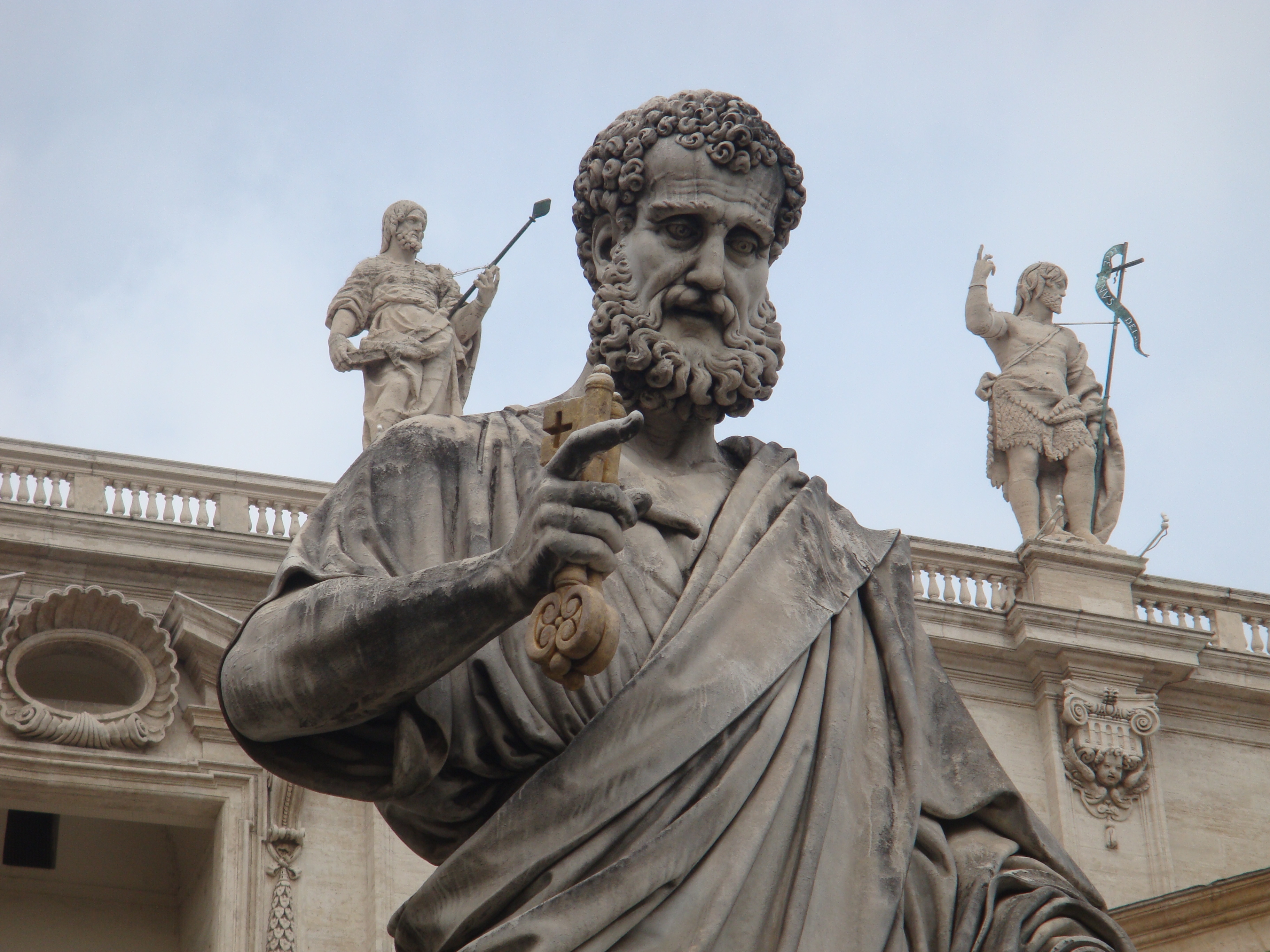
What was St. Peter talking about in regards to Christ's preaching to the spirits in prison? What was Christ preaching? The Law? The Gospel? The argument inevitably involves an exegetical discussion concerning the following passage:

1 Peter 3:18 For Christ also hath once suffered for sins, the just for the unjust, that he might bring us to God, being put to death in the flesh, but quickened by the Spirit:
19 By which also he went and preached unto the spirits in prison;
20 Which sometime were disobedient, when once the longsuffering of God waited in the days of Noah, while the ark was a preparing, wherein few, that is, eight souls were saved by water.

Saturday, May 9, 2015

Prof. Th. Engelder on The Hades Gospel Part I: "The Hades Gospel"


The Harrowing of Hell--What was Christ doing in Hell? What "preaching" was he doing there? Was he saving people? What happens to all those people today who die without ever hearing the Gospel? Do they really go to Hell...forever? Why are some saved and not others?

In six essays, published in the Concordia Theological Monthly during 1945-6, Theodore Engelder confronted the prevalent, and still persistent belief and false hope, that there is a "second chance" or further hope for salvation for those who die in unbelief.
 
[Here is a brief introduction to Engelder and his work.]

Tuesday, December 30, 2014

Biblical Ethics Concerning Young People by P.E. Kretzmann

P.E. Kretzmann is no stranger to readers of L-TOMs. He was an important figure in early and mid-20th century Lutheranism. Some of his other works have been reviewed here:
Christian Art: In the Place and in the Form of Lutheran Worship 

In The Days of Solomon

This Do Ye Often

The Lutheran Pastor as Teacher


P.E. Kretzmann was well known for his focus on the education and training of youth. Intimately tied to, and part of, Christian education, moral formation is crucial to the well-being of a Christian. In his September, 1933 essay, "Biblical Ethics Concerning Young People," Kretzmann begins with a lead in that could have been written yesterday, and is probably truer now...

Friday, December 26, 2014

Theodore Engelder, 1865-1949 in Concordia Theological Monthly August, 1949

http://l-toms.blogspot.com/2013/09/scripture-cannot-be-broken-by-theodore.html

Theodore Engelder, 1865-1949; in CTM August, 1949

***Update: A little bit more of his bio, here, in German.


Here at L-TOMs, we sometimes will venture further back into the German speaking resources of the Missouri Synod from time to time, but are mostly focused on the English works of the first half of the century.

A major figure in the Synod during this time was Theodore Engelder, perhaps most famous for being the main translator for Pieper's Dogmatics and the book Scripture Cannot Be Broken, review and information on where it is available here. It is an excellent defense of the doctrine of Scripture's inspiration and inerrancy, a topic on which Engelder particularly concentrated.