Thursday, July 28, 2016
DOMI MANSIT--"She Stayed at Home"
In the Concordia Theological Monthly of October 1936, P.E. Kretzmann placed sections of an editorial from the magazine America in Miscellanea. While not a Lutheran writing, it is indeed a treasure that every Lutheran would heartily celebrate and by it be uplifted. "She Stayed at Home" is true, sweet, in the best sense of the word, and a heartfelt reminder of the great gift of motherhood our Lord has bestowed upon mankind.
Would we continue to see in today's Lutheran periodicals such sentiments and praise for the work, being faithfully and lovingly carried out, that God has given to womankind.
Read it below, or go here to read/access the PDF (go to the last page in the document).
Wednesday, July 27, 2016
"Matins as the Chief Service" by P.E. Kretzmann
Note: Thank you very much to Rev. Aaron Uphoff of Good Shepherd Lutheran Church, Randolph, NJ for the "heads up" and commentary on this interesting article.
In his June 1933 article in Concordia Theological Monthly, “Matins as the Chief Service,” P.E. Kretzmann gives modern readers a glimpse into a
previous generation’s disagreements about worship. Responding to the apparent push by some
Lutheran ministers to substitute Matins for the Common Service without
Communion on certain Sundays and/or festivals, Kretzmann gives an overview of
three principles which guide Lutheran liturgics, discusses their application in
service liturgies, and suggests guidelines should one insist upon making the
Matins substitution.
The three principles are the gem of the article and he outlines
them thusly:
1. Liturgical Unity: The liturgy must have a “singleness, wholeness, unity, so that the service does not present a disjointed conglomeration, but organizes into a single whole the many parts and intricate relations of a great symphony or a Gothic cathedral.” (p.438)
Monday, December 28, 2015
Living with Luther by J. M. Weidenschilling
J.M. Weidenschilling was a master at summarization and brevity. He produced many short works on basic subjects for the Missouri Synod in the 1940's and 50's. Some of the most famous and widely used were: Our Bible; Our Church; and, Our Creed. Living with Luther is a slender 48 page booklet originally designed to be used in the classroom. It could also easily be used as an introduction or jumping off point for an adult study or a tract for anyone wanting a brief overview of the life of Martin Luther and the Reformation.
Living with Luther was published by Concordia Publishing House in 1945, was slightly revised in 1970, and reprinted numerous times. The illustrator was Gustav Koenig. The Lutheran Heritage Foundation also worked to have it translated into Lithuanian in 1996 (translator: Renata Ambrazeviciene).
Weidenschilling was working in the tradition of Gustav Just's Life of Luther to provide a concise, basic summary of Luther's life and introduction to the Reformation. The two works cover much of the same ground, often even in the exact same sequence and manner. The pictures in the older volume are again used in Weidenschilling's, though they are supplemented with additional illustrations.
Labels:
Books,
Catechesis-Adult,
Catechesis-Children,
Church History,
CPH,
Easy to Find,
Education,
Historical Theology,
History,
L-TOMs,
Online Works,
Short Works,
Sunday School,
Weidenschilling
Wednesday, December 23, 2015
An Explanation of the Common Service
Note: Thank you very much to Rev. Mike Grieve of Holy Cross Lutheran Church, Golden, IL for this excellent review of a true classic. Anyone wanting to know more about our worship service in the Lutheran Church truly ought to pick this book up. It can be purchased from Emmanuel Press. It was originally compiled and published by the General Council to teach people about the beauty and truth of the Common Service. What a blessing that it is still in print!
“An Explanation of the Common Service”: Fifth Edition Revised and Enlarged; United
Lutheran Publication House, Philadelphia, 1908; Reprinted in 2006 by Emmanuel
Press, 1916 Ridgewood Ave., SE, Grand Rapids, Michigan 49506
The answer, “that’s the way we’ve always done it,” to the
question of, “why do we do what we do in worship?” is not only unhelpful, but
it’s also false. We do know “why we do what we do in worship.” Sometimes we just don’t know where to find
the answer to the question. An
Explanation of the Common Service helps give concrete answers to questions
that would otherwise be left in abstract thought and speculation. What would seem to be a daunting number of
questions and answers (250) is eased by the reality that the book is just 120
pages in length, which includes a history of Christian hymnody; liturgical
colors and their significance; and index and glossary.
Thursday, October 29, 2015
The Gift of Communion (Communion and Mass) by Carl F. Wisløff
Note: Thank you very much to Rev. Benjamin D. Hertel of Saint Luke Lutheran Church in Rensselaer, IN for giving us a review of Carl F. Wisløff's The Gift of Communion (Nattverd og messe/Communion and Mass). While not strictly an L-TOM, nor written by an American Lutheran, it was an influential work, translated by Joseph M. Shaw and published by Augsburg Publishing House in 1964. It is included in the Concordia Heritage Series (the dark green hardback series). You can buy it on Amazon or find a copy through Bookfinder.
Wisløff (1908-2004) was a Norwegian theologian known for his opposition to liberal theology. He was also influenced by Norwegian Pietism, especially in regards to lay preaching and evangelistic endeavors. His most influential book with the Norwegian public was Jeg vet på hvem jeg tror (I Know in Whom I Believe).
Review of Carl F. Wisløff's The Gift of Communion
by Rev. Benjamin D. Hertel
A short, but thick book, Carl Wisløff’s work is not something I would recommend to the layman or the arm-chair theologian. The concepts are easy enough, but the way Wisløff presents his points can be a bit congested and repetitious at times.
Wisløff seems to assume a lot from his reader and that he is a trained pastor. Knowledge of certain terms, events, and theology are sometimes not explained. Nevertheless, Wisløff has, in this short book, amassed a large amount of Luther quotes. Though it reads like a text-book, for this we should be grateful.
Wisløff's main claim is that not enough attention has been paid to Luther speaking against the “sacrifice of the Mass”. He says that Lutherans would rather speak against the Reformed or the enthusiasts and probably find Luther lacking on the subject.
Labels:
Concordia Heritage Series,
CPH,
Doctrine,
Dogmatics,
Exegetical Theology,
Gottesdienst,
Guest Posts,
Liturgy,
Lord's Supper,
Luther,
New Testament,
Norwegian,
Romification,
Theology,
Worship
Wednesday, October 28, 2015
Index of Posts on Theodore Engelder's series of essays concerning the "Hades Gospel"
The issue of the fate of the soul after death and the idea of a "second chance," with all the surrounding questions, is important for the Christian. Pastors especially ought to be able to give clear answers concerning this topic. Engelder's essays offer a firm biblical footing on the subject.
Posts on Engelder's essays on the "Hades Gospel":
Tuesday, October 27, 2015
Prof. Th. Engelder on The Hades Gospel Part VI: "The Hades Gospel and the Apocatastasis Gospel"
![]() |
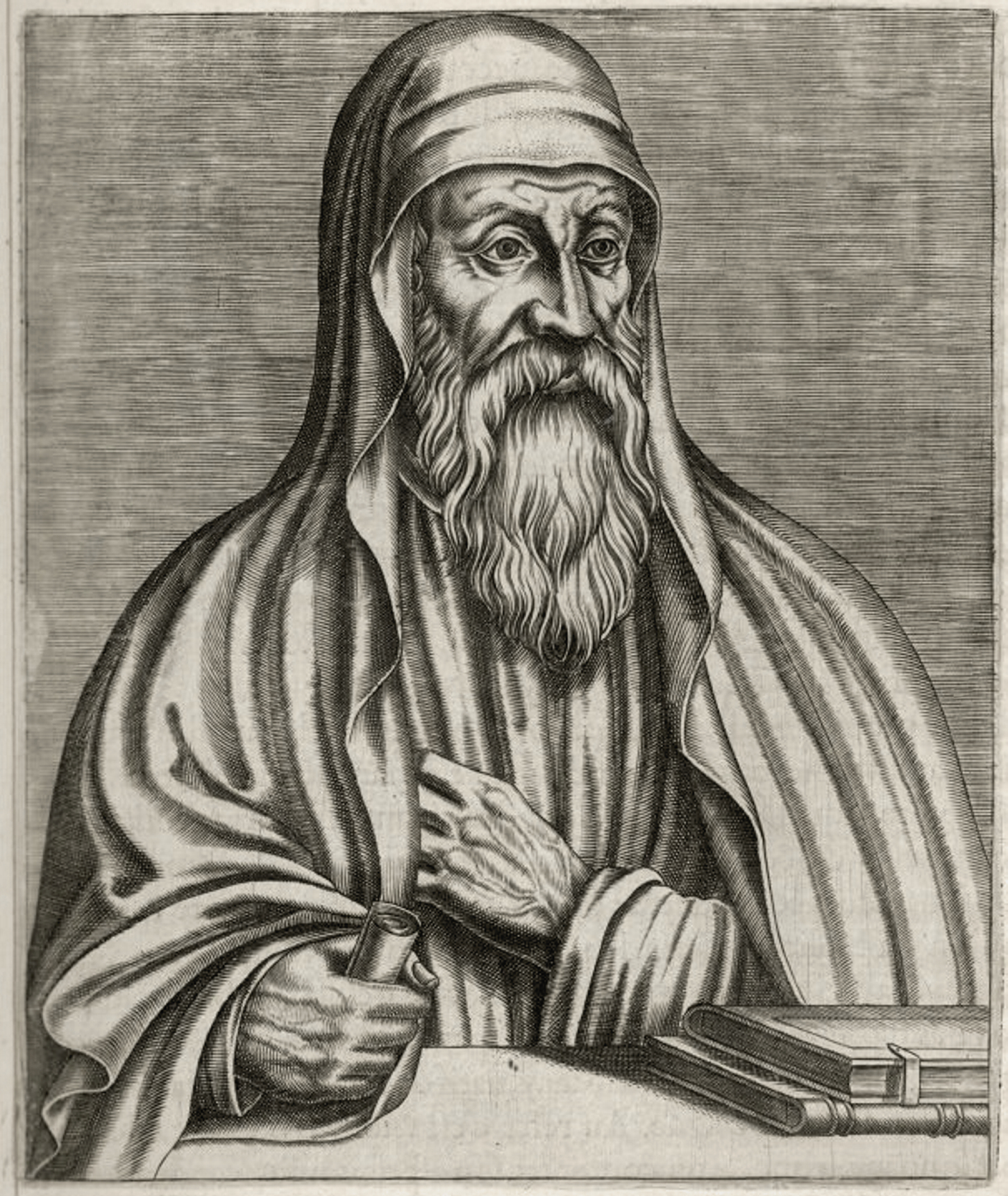
| Another name for those who believe in the Apocatastasis has been Origenists |
In Part VI, Engelder confronts the related error of apocatastasis, the eventual redemption and restoration of all the damned. This dangerous and unscriptural doctrine is the end of the road of the Hades Gospel.
[Note: Here is the link to the first (and introductory) post in this series: Prof. Th. Engelder on The Hades Gospel Part I: "The Hades Gospel", the second post: Part II, "The Argument in Support of the Hades Gospel,", the third post: Prof. Th. Engelder on the Hades Gospel Part III: "The Evil of The Hades Gospel" the fourth post: Prof. Th. Engelder on the Hades Gospel Part IV: "Some Remarks on the Question of the Salvation of the Heathen", the fifth post: Prof. Th. Engelder on the Hades Gospel Part V: "The Protestant Purgatory"]
He divides his critique into three sections. First he attacks on exegetical grounds, including an extensive discussion on the word "age(s)" means. He shows how that the denial of the eternality of damnation also undermines the beauty, surety, and everlasting nature of the promise of eternal life. Secondly, he attacks their elevation of reason over the Word of God [with a brief side trip to make the logical and historical connection between the belief in the apocatastasis and Pelagianism, and the dependence and example of Origen].
He states:
But it is a wicked business. "Men derive this dogma from their reason, their sense of justice, their conception of mercy. And men have not the right to use the argument under discussion. For what it amounts to is this: reason presumes to tell God what He must do in order to retain His character as a merciful and just God. And shall reason teach God ethics? Presumptuous reason is telling God that unless He conducts His judgment according to human standards, His conduct would be unfair, partial, unrighteous, unethical. ...Will a man judge God?" (CON. THEOL. MONTHLY, 1945, p.395.) These words were addressed to the Hades theologians, who demand, because of their "merciful" sentiments, that God must save half of the inmates of hell, Hades. They apply no less to the apocatastasis theologians, who because of their sense of "mercy and justice," require God to lead all the damned out of hell to heaven. And since the God of the Bible speaks a different language, they make out of the God of the Bible "a devil." Presumptuous reason will stop at nothing.
Subscribe to:
Posts (Atom)