Showing posts with label CTM. Show all posts

Friday, November 24, 2023

"Brief Paragraphs on the Question: When does the New Testament Economy Begin?" by William F. Beck


William F. Beck is best known for An American Translation, or, as it is often called, the "Beck Bible" and other projects involving presenting the Bible to young and old. If you want to know a little more about Beck, his son Reu wrote an article on him in 2003. Beck also wrote several articles and shorter studies for the synodical seminaries' journals. Brief Paragraphs on the Question: When does the New Testament Economy Begin? in the March 1938 Concordia Theological Monthly was his earliest academic article as far as I can determine. It was written when Beck was a parish pastor in Clayton, IL. The article takes up a question that is natural, and frequently comes up in the mind of anyone who has read the Bible--how and when did the church shift from being under, or following, the particularities of the Old Testament's rites and rituals (economy) to the New Testament rites and rituals (economy)?


He begins by stating what Christians believe and is readily understood concerning the matter: 

Jesus, the Mediator of the New Covenant (Heb. 3:5,6; 8:6-13; 12:24), set aside the Old Covenant by means of His work of redemption during the thirty-three years of His humiliation (Gal. 4:4,5). In this period He fulfilled the Moral Law by keeping it (Rom. 5:19; 10:4), and by His suffering He freed us from its curse (Gal. 3:13). In this time He also substituted the reality of His atonement for the shadow of the Ceremonial Law and thus made the observance of its ordinances unnecessary (Col. 2:16, 17).

While the basic point is simple to understand, how this transition, or working out, unfolded is a little more complicated, as Beck points out:

The displacement of the old economy by the new nevertheless was not an instantaneous happening. The divine revelations of the abrogation of the whole Covenant and of the individual elements which make up the complex aggregate of the Covenant came at various times. Furthermore, the Covenant was to be eternal. It was difficult, therefore, for a people in whom this Covenant had been inbred to understand that part of it could be set aside, that an act which once was a sin of disobedience punishable by death might by divine direction become a good work. It was also difficult to find the clear line of demarcation between the ceremonial and the moral laws and then to maintain liberty, in the face of great opposition, in regard to the Ceremonial Law. Doubt in regard to the will of God and fear of sinning (e. g., Acts 10:14) lingered in the hearts of God's people and rendered the adoption of the change in practise a gradual one.

He first structures his discussion around the major events in the earthly ministry of Christ: His birth, relation to John the Baptist, baptism, public ministry, crucifixion, and resurrection. He then subjects particular practices of the Old Testament to two questions: "When did God expressly set it aside? At what time did His people become emancipated from it?" He covers the following topics:

Saturday, September 2, 2017

Engelder on "The Hades Gospel": Still Needed Today! (Compilation of All Links)


Once again, the worth of this theological treasure, Engelder's "The Hades Gospel," is proven. For those confused on the matter, Engelder makes clear that Lutherans do not believe in the "Hades Gospel." We do not believe that you get a "second chance" in the afterlife or on the Last Day.

People who die in unbelief go to hell. That is what the Bible teaches. If that is unsettling, than you must refresh your abhorrence and hatred for sin in conformity and in reflection of God's righteous wrath against sin. As Engelder points out, we must repent and mortify our fleshly thoughts. We are not to accuse God of sin by saying, or implying, that He wrongfully didn't give people a "fair chance" as if all men were not poor miserable sinners who deserve damnation.

Friday, August 5, 2016

"Propositions on Marriage and Divorce" (and Engagement) by P.E. Kretzmann


There is not much to say about this little gem from the June 1932 CTM by P.E. Kretzmann besides to commend its clarity. Kretzmann succinctly summarizes, and gives the pertinent biblical citations for, the traditional Lutheran (biblical) teaching on marriage, divorce, and engagement.

Since the 1950's, the Missouri Synod has sounded an unclear note, or at least one inconsistent with its own history, concerning its teaching on what makes a marriage a marriage, particularly in regards to how one rightly enters into marriage.

Much of the confusion, or avoidance of the issue, arose from a desire during the mid-20th century to change the Synod's teaching on engagement--resulting in a weakened definition and understanding of marriage.

This is especially apparent when you trace the evolution of the synodical explanation of the catechism on the 6th Commandment. Up to and including the 1943 version, the teaching on the nature of marriage, and how it is entered into, reflects the same teaching that had been clearly set forth in countless articles, essays, books, and presentations throughout the Synod's history, which in turn stood in continuity with the teaching of Luther, Lutheran Orthodoxy, and the Scriptures themselves.


From the 1912 explanation:

Friday, July 29, 2016

"Dr. Francis Pieper the Churchman" by W.H.T Dau


In the October 1931 Concordia Theological Monthly, W.H.T. Dau wrote a moving tribute in honor of the Dr. Francis (Franz) Pieper, who had passed away that June. He begins his essay by quoting part of Pieper's address to the Missouri Synod's 1893 convention.

There is no such thing in the Christian Church as mere teaching; all teaching is to be reduced to practise. The Christian Church is not a philosophers' school, where only teaching is done, but a society of people who by faith in the Gospel and mortification of the flesh are traveling on the way to everlasting life and are commissioned to lead others into this way. 

Dau recalls that this essay gave the delegates confidence that Pieper was carrying on the confessionalism of Walther at the St. Louis Seminary, and noted that the convention would elect him to be the president of Synod 6 years later. Dau makes the point that according to Walther and Pieper, and in truth, teaching theology and administering practical affairs are by no means of a conflicting nature, but logically and necessarily connected. Dau further says:

Thursday, July 28, 2016

DOMI MANSIT--"She Stayed at Home"


In the Concordia Theological Monthly of October 1936, P.E. Kretzmann placed sections of an editorial from the magazine America in Miscellanea. While not a Lutheran writing, it is indeed a treasure that every Lutheran would heartily celebrate and by it be uplifted. "She Stayed at Home" is true, sweet, in the best sense of the word, and a heartfelt reminder of the great gift of motherhood our Lord has bestowed upon mankind.

Would we continue to see in today's Lutheran periodicals such sentiments and praise for the work, being faithfully and lovingly carried out, that God has given to womankind.

Read it below, or go here to read/access the PDF (go to the last page in the document).


Wednesday, July 27, 2016

"Matins as the Chief Service" by P.E. Kretzmann


Note: Thank you very much to Rev. Aaron Uphoff of Good Shepherd Lutheran Church, Randolph, NJ for the "heads up" and commentary on this interesting article.


In his June 1933 article in Concordia Theological Monthly, “Matins as the Chief Service,” P.E. Kretzmann gives modern readers a glimpse into a previous generation’s disagreements about worship.  Responding to the apparent push by some Lutheran ministers to substitute Matins for the Common Service without Communion on certain Sundays and/or festivals, Kretzmann gives an overview of three principles which guide Lutheran liturgics, discusses their application in service liturgies, and suggests guidelines should one insist upon making the Matins substitution.

The three principles are the gem of the article and he outlines them thusly:

1. Liturgical Unity: The liturgy must have a “singleness, wholeness, unity, so that the service does not present a disjointed conglomeration, but organizes into a single whole the many parts and intricate relations of a great symphony or a Gothic cathedral.” (p.438)

Wednesday, October 28, 2015

Index of Posts on Theodore Engelder's series of essays concerning the "Hades Gospel"


The issue of the fate of the soul after death and the idea of a "second chance," with all the surrounding questions, is important for the Christian. Pastors especially ought to be able to give  clear answers concerning this topic. Engelder's essays offer a firm biblical footing on the subject.


Posts on Engelder's essays on the "Hades Gospel":

Tuesday, October 27, 2015

Prof. Th. Engelder on The Hades Gospel Part VI: "The Hades Gospel and the Apocatastasis Gospel"


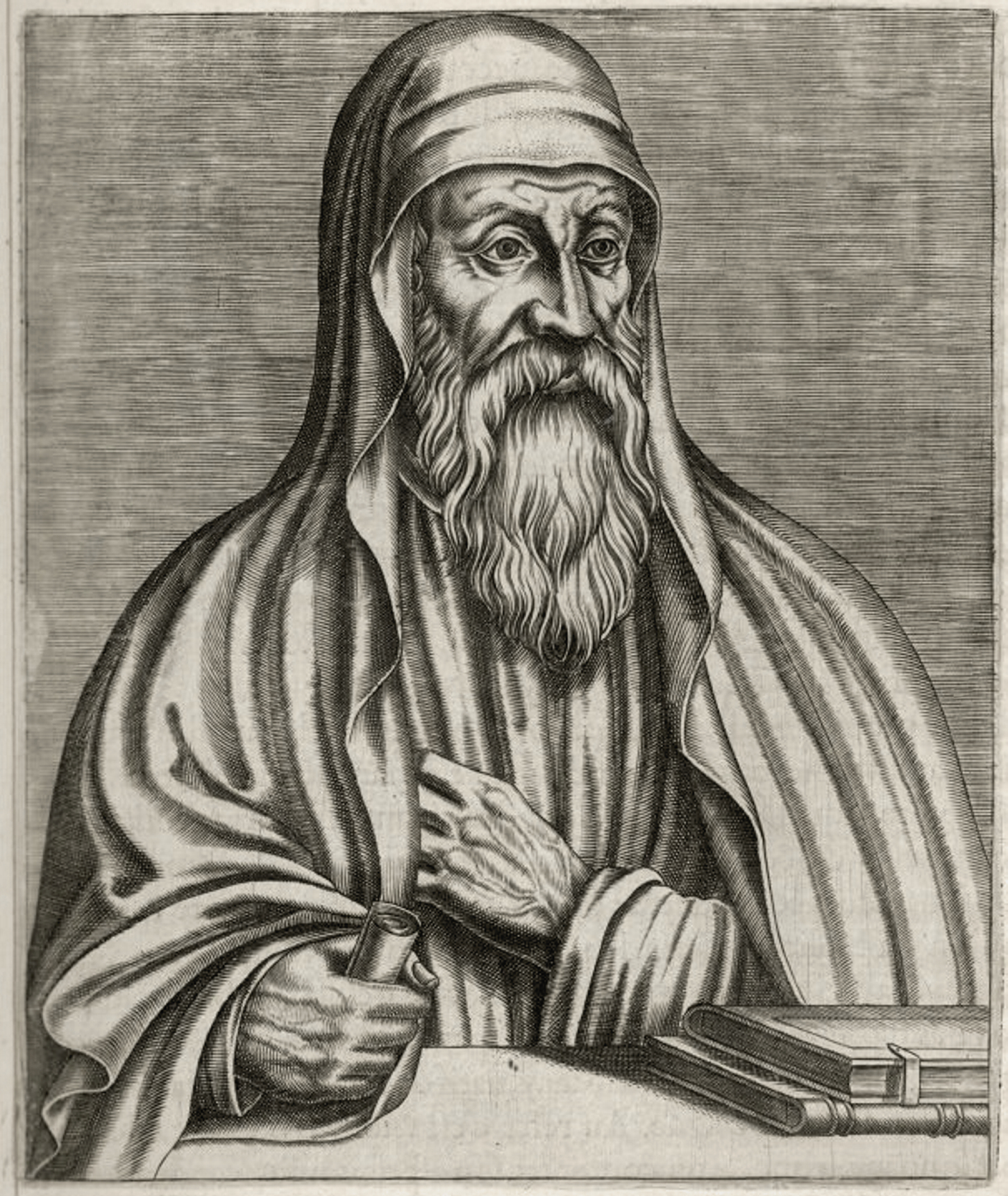
Another name for those who believe in the Apocatastasis has been Origenists

In Part VI, Engelder confronts the related error of apocatastasis, the eventual redemption and restoration of all the damned. This dangerous and unscriptural doctrine is the end of the road of the Hades Gospel.

[Note: Here is the link to the first (and introductory) post in this series: Prof. Th. Engelder on The Hades Gospel Part I: "The Hades Gospel", the second post: Part II, "The Argument in Support of the Hades Gospel,", the third post: Prof. Th. Engelder on the Hades Gospel Part III: "The Evil of The Hades Gospel" the fourth post: Prof. Th. Engelder on the Hades Gospel Part IV: "Some Remarks on the Question of the Salvation of the Heathen", the fifth post: Prof. Th. Engelder on the Hades Gospel Part V: "The Protestant Purgatory"]

He divides his critique into three sections. First he attacks on exegetical grounds, including an extensive discussion on the word "age(s)" means. He shows how that the denial of the eternality of damnation also undermines the beauty, surety, and everlasting nature of the promise of eternal life. Secondly, he attacks their elevation of reason over the Word of God [with a brief side trip to make the logical and historical connection between the belief in the apocatastasis and Pelagianism, and the dependence and example of Origen].

He states:
But it is a wicked business. "Men derive this dogma from their reason, their sense of justice, their conception of mercy. And men have not the right to use the argument under discussion. For what it amounts to is this: reason presumes to tell God what He must do in order to retain His character as a merciful and just God. And shall reason teach God ethics? Presumptuous reason is telling God that unless He conducts His judgment according to human standards, His conduct would be unfair, partial, unrighteous, unethical. ...Will a man judge God?" (CON. THEOL. MONTHLY, 1945, p.395.) These words were addressed to the Hades theologians, who demand, because of their "merciful" sentiments, that God must save half of the inmates of hell, Hades. They apply no less to the apocatastasis theologians, who because of their sense of "mercy and justice," require God to lead all the damned out of hell to heaven. And since the God of the Bible speaks a different language, they make out of the God of the Bible "a devil." Presumptuous reason will stop at nothing.

Monday, June 29, 2015

Prof. Th. Engelder on the Hades Gospel Part V: "The Protestant Purgatory"


Do men need further sanctifying and purifying after death? What of an intermediate state: purgatory or something akin to it? Can men truly be perfectly purged of the sin still clinging to them in the instant of death?

In "The Protestant Purgatory," Part V of his series of essays on the "Hades Gospel," Prof. Th. Engelder considers the teaching of purgatory, or the state(s) of men who are dead preceding the resurrection. He rightly points out the return to the Roman teaching of purgatory by Protestants who argue for the Hades Gospel (a second chance for salvation after death) and who support some sort of intermediate state in the afterlife. Engelder:

"That is the Catholic purgatory. And what is the Protestant purgatory? The Hades theologians, particularly those who believe in salvation by faith alone, refuse to embody all the Romish features in their reconstructed purgatory. But they have taken over this feature: the dying Christian carries remnants of sin with him into the next world and must go through a purgatorial, purifying process in Hades before he enters heaven."

Monday, June 22, 2015

Prof. Th. Engelder on the Hades Gospel Part IV: "Some Remarks on the Question of the Salvation of the Heathen"


This is the question that always gets raised. What about the people in ancient Peru who never heard the Gospel? What about the child in Saudi Arabia who is born a Muslim by no fault of his own yet strives to be a good and just individual?

[Note: Here is the link to the first (and introductory) post in this series: Prof. Th. Engelder on The Hades Gospel Part I: "The Hades Gospel", the second post: Part II, "The Argument in Support of the Hades Gospel,", and the third post: Prof. Th. Engelder on the Hades Gospel Part III: "The Evil of The Hades Gospel"]

In Part IV, "Some Remarks on the Question of the Salvation of the Heathen," Engelder takes up the issues and questions surrounding the salvation of the heathen. A particularly memorable line is the following: "Nor is it surprising that the liberal Protestants teach that the heathen can save themselves, with the help of God. The Liberals are blood brothers of the Catholics, of the race of Pelagius." The warnings of the essay are clear: do not give up the universality of grace though the facts seem to contradict this article of faith; and, do not be led into strange unbiblical doctrines by rationalizations and human searches into the unsearchable mysteries of God. These paths start in the (vain) hope of explaining God's ways further and more clearly than He Himself does, and ultimately leads to accusing the Lord Himself of evil and malice.

Wednesday, June 17, 2015

Prof. Th. Engelder on the Hades Gospel Part III: "The Evil of The Hades Gospel"


In his third essay on the topic, Engelder shows the falsehood of the Hades Gospel under 5 headings:

[Note: Here is the link to the first (and introductory) post in this series: Prof. Th. Engelder on The Hades Gospel Part I: "The Hades Gospel" And the second post: Part II, "The Argument in Support of the Hades Gospel,"]

1. To proclaim the "second chance" after death Hades Gospel contradicts the clear teaching of Scripture.

In this section, Engelder specifically meets the charge that a belief that the fate of a soul is fixed at death leaves no room for the final judgment. He also confronts the argument that since some of the Church Fathers accepted the possibility of conversion after death that we must as well.

2. Engelder's second major point is that the Hades Gospel's hope of a second chance rests upon human reason and speculation. He points out that the theologians who argue for such a teaching are following their own sense of justice and mercy in opposition to what the Scriptures actually say. Along the same lines, Engelder confronts the trick of many, which looks superficially like a concern for the analogy of faith, in which the teaching of "the whole Bible" (das Schriftganze) contradicts specific passages. Unlike the using the analogy of faith to explain apparent contradictions or seemingly difficult passages, hazy, and ill-defined broad principles (of course truly emanating from the interpreter himself) overwhelm or trump the clear words and teachings of the Scriptures.

"The Hades gospel, spawned by rationalistic thinking, is an evil thing. The Hades theology sets the verdict of reason and feeling above the declaration of God's Word. God wants His children to accept the teaching of Scripture in simple faith, to believe that God's ways are just and right even if they cannot understand them, but reason, "the archwhore and Satan's bride" (Luther, XX: 232), would seduce God's children from implicit faith and asks them to say to God: We cannot accept statements of Scripture which outrage our reason. The evil of the Hades gospel consists in this, that it weans the Christians away from the allegiance to their Lord."


Monday, May 11, 2015

Prof. Th. Engelder on The Hades Gospel Part II: "The Argument in Support of the Hades Gospel"


What was St. Peter talking about in regards to Christ's preaching to the spirits in prison? What was Christ preaching? The Law? The Gospel? The argument inevitably involves an exegetical discussion concerning the following passage:

1 Peter 3:18 For Christ also hath once suffered for sins, the just for the unjust, that he might bring us to God, being put to death in the flesh, but quickened by the Spirit:
19 By which also he went and preached unto the spirits in prison;
20 Which sometime were disobedient, when once the longsuffering of God waited in the days of Noah, while the ark was a preparing, wherein few, that is, eight souls were saved by water.

Saturday, May 9, 2015

Prof. Th. Engelder on The Hades Gospel Part I: "The Hades Gospel"


The Harrowing of Hell--What was Christ doing in Hell? What "preaching" was he doing there? Was he saving people? What happens to all those people today who die without ever hearing the Gospel? Do they really go to Hell...forever? Why are some saved and not others?

In six essays, published in the Concordia Theological Monthly during 1945-6, Theodore Engelder confronted the prevalent, and still persistent belief and false hope, that there is a "second chance" or further hope for salvation for those who die in unbelief.
 
[Here is a brief introduction to Engelder and his work.]