A
s mentioned in the introductory post in this series, The Abiding Word was a project for the centennial celebration of the founding of the Missouri Synod. The essays were based upon convention essays and other works in German to preserve "the father's faith in the children's language."Each essay reworks the treasures from the German speaking Missouri Synod in differing ways. Some summarize, some essays extensively quote, and others more extensively rework and synthesize previous essays. For each essay, I will try to provide some information about the author and give a brief review of the essay.
BTW, here are some some interesting links regarding the publication of The Abiding Word: Volume I:
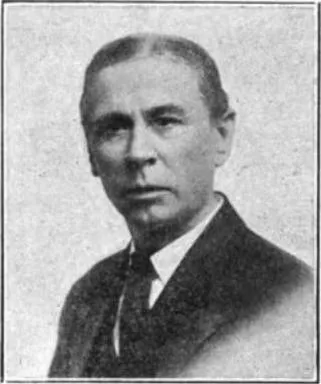
1. The Doctrine of Creation by G. Viehweg was a 1945 convention essay of the Southern Nebraska District.

Pr. Gotthold Moritz Viehweg was a professor at Concordia College in Austin, Texas from 1928-1964. He was born in Planitz, Saxony on October 13, 1891. After coming to America, he went to Concordia College--Milwaukee and Concordia Seminary--St. Louis, graduating in 1914. He served as a pastor to congregations in Wellfleet, NE, Winfield, KS, and Arapahoe, NE. He died on August 19, 1977. (
details found through CHI)
You can find some
interesting correspondence of and about Viehweg and the beginning of his time at Concordia--Austin
here.
The essays which form the background of Viehweg's work are:
a. District Convention Essays
Atlantic, 1909, Chr. Merkel.
Canada, 1898, F. Bente; 1901, H. Wente; 1903, Wm. Moll.
Central, 1878, E. W. Kaehler; 1885, C. Gross.
Illinois, 1885, A Brauer.
Michigan, 1901, Th. Engelder.
Nebraska, 1894, A. Graebner.
South Dakota (and, it seems from the text of the essay, Southern), 1910, 1912, R. Pieper.
b. Articles
Lehre und Wehre, 22: 97, 240; 23: 273, 335, 362; 46: 8, 39, 135, 164, 217; "Die Evolutionismus und die Wissenschaften" by F. Bente. 55: 289, 351, 454, 499, 546; "Die Evolution und die Bibel" by J. Hoeness.
Theological Quarterly, 9: 271, A. Graebner; 14: 78, 155, Th. Graebner.
c. Other References in the Text
Christliche Dogmatik, F. Pieper.
Notes on Genesis, W. A. Maier.
Evolution; an Investigation and a Criticism, Th. Graebner.
Christliche Dogmatik, J. T. Mueller.
Genesis, H. C. Leupold
various quotes from Luther.
Viehweg strongly and hilariously condemns both the unbiblical and unscientific view of those who reject the biblical account of creation:
If we men presume to correct God's account of creation through inferences from the present condition of the world, we are indulging in unscientific conceit and pretense which does not become a Christian or any man for that matter. The disagreement between geologists concerning the age of the earth a man is so great that they can speak of the assured results of geology only if they completely give up the use of that small amount of reason which we still have after the Fall. Some are satisfied with a few hundred thousand years, other demand millions of years. Among these gentlemen a million of years is a mere trifle. They are very generous; a million more or less does not matter, but is that scientific?
He also relates the differing opinions of R. Pieper and some of the delegates of the Southern District concerning the firmament (which is actually a long running debate, z. B. Luther and Baier disagree on this):
R. Pieper, South. Distr., 1910, pp. 26, 27, claims that the waters beyond the firmament are nothing but the clouds...Some of the delegates of the Southern District did not agree with R. Pieper's views on the firmament. They did not think that the firmament was the atmosphere surrounding the earth, but the star-spangled vault of the sky, that the clouds were not the waters beyond, but rather under firmament. The waters beyond the firmament were, in their opinion, not fog or vapor, but water whose nature is unknown to us.
Our forefathers also had quite a robust understanding of the natural knowledge of God. Concerning the birds of creation declaring the glory of God, Viehweg writes:
R. Pieper mentions especially the meadowlark and the nightingale. If a man has an ear for these voices, they sing into his heart the wisdom and goodness of his Creator, and admonish him to join them in the praises of the Creator, forgetting useless, heathenish cares and worries.
The essay is definitely worth reading in full.
Need to Get Level: 10/10 for pastors; 3/10 for laymen [For the Abiding Word Set in General]
If you are a Lutheran pastor, particularly a Missouri Synod pastor, and do not have this on your shelf, you ought to be ashamed of yourself. Bear the proper fruit of repentance and get a copy. If you are a layman who is very interested in studying dogmatics or digging into a particular doctrinal topic, these essays will give you an English survey of what our early Missouri forefathers taught.
You can get new
paperbacks from CPH, or find original hardbacks on Amazon and other online booksellers.
Other Posts in the Series on The Abiding Word
The Abiding Word: Volume I
The Abiding Word: Volume II
The Abiding Word: Volume III
Contents of Volume One