Showing posts with label Doctrine. Show all posts

Friday, January 20, 2023

"Freemasonry" by Rev. William Dallmann (Tract)

 
In the tract "Freemasonry," William Dallmann discusses the false teaching and anti-Christian nature of freemasonry. He doesn't get bogged down in broader theories about the masons but rather focuses on hanging their own words around them. This resulted in a brief, helpful summary of the problems and false doctrine of freemasonry.

The full tract is below.

Note: For another tract by Dallmann and a brief introduction to this new series, "Tracts of the old Missouri Synod," click here. 

Wednesday, January 18, 2023

"Why I Am a 'Missourian'" by Rev. William Dallmann and an Introduction to Tracts of Old Missouri


Tracts have always been a powerful form of popularly "getting the word out." During the Reformation, pamphleteers shaped the public's perception of innumerable topics. While perhaps memes have surpassed the paper tract or pamphlet today, they are still used and are of great use. 

I have seen hundreds of Lutheran tracts and am fascinated by them. They help us see what our forefathers thought was essential to say about particular subjects to a popular audience. Summarization betrays much about how a person, or a Synod, thinks and thus I'd like to share some of the tracts of "Old Missouri." 

Note: When posting tracts, I plan on keeping my commentary brief and posting the complete tract/s.

The first tract is "Why I Am a 'Missourian'" by William Dallmann. 


Monday, October 3, 2022

The Abiding Word: Volume I Part 1 "The Doctrine of Creation" by Prof. Gotthold Viehweg


As mentioned in the introductory post in this series, The Abiding Word was a project for the centennial celebration of the founding of the Missouri Synod. The essays were based upon convention essays and other works in German to preserve "the father's faith in the children's language."

Each essay reworks the treasures from the German speaking Missouri Synod in differing ways. Some summarize, some essays extensively quote, and others more extensively rework and synthesize previous essays. For each essay, I will try to provide some information about the author and give a brief review of the essay.

BTW, here are some some interesting links regarding the publication of The Abiding Word: Volume I:

-J .T. Mueller complaining about an unfair review in the ALC's periodical (scroll to page 624)  


1. The Doctrine of Creation by G. Viehweg was a 1945 convention essay of the Southern Nebraska District.


Pr. Gotthold Moritz Viehweg was a professor at Concordia College in Austin, Texas from 1928-1964. He was born in Planitz, Saxony on October 13, 1891. After coming to America, he went to Concordia College--Milwaukee and Concordia Seminary--St. Louis, graduating in 1914. He served as a pastor to congregations in Wellfleet, NE, Winfield, KS, and Arapahoe, NE. He died on August 19, 1977. (details found through CHI)

You can find some interesting correspondence of and about Viehweg and the beginning of his time at Concordia--Austin here.


The essays which form the background of Viehweg's work are:
    
    a. District Convention Essays 

        Atlantic, 1909, Chr. Merkel.
        Canada, 1898, F. Bente; 1901, H. Wente; 1903, Wm. Moll.
        Central, 1878, E. W. Kaehler; 1885, C. Gross.
        Illinois, 1885, A Brauer.
        Michigan, 1901, Th. Engelder.
        Nebraska, 1894, A. Graebner.
        South Dakota (and, it seems from the text of the essay, Southern), 1910, 1912, R. Pieper.
    
    b. Articles

        Lehre und Wehre, 22: 97, 240; 23: 273, 335, 362; 46: 8, 39, 135, 164, 217; "Die Evolutionismus und die Wissenschaften" by F. Bente. 55: 289, 351, 454, 499, 546; "Die Evolution und die Bibel" by J. Hoeness.
        Theological Quarterly, 9: 271, A. Graebner; 14: 78, 155, Th. Graebner. 

    c. Other References in the Text

        Christliche Dogmatik, F. Pieper. 
        Notes on Genesis, W. A. Maier.
        Evolution; an Investigation and a Criticism, Th. Graebner.
        Christliche Dogmatik, J. T. Mueller.
        Genesis, H. C. Leupold
        various quotes from Luther.

Viehweg strongly and hilariously condemns both the unbiblical and unscientific view of those who reject the biblical account of creation:

If we men presume to correct God's account of creation through inferences from the present condition of the world, we are indulging in unscientific conceit and pretense which does not become a Christian or any man for that matter. The disagreement between geologists concerning the age of the earth a man is so great that they can speak of the assured results of geology only if they completely give up the use of that small amount of reason which we still have after the Fall. Some are satisfied with a few hundred thousand years, other demand millions of years. Among these gentlemen a million of years is a mere trifle. They are very generous; a million more or less does not matter, but is that scientific?
He also relates the differing opinions of R. Pieper and some of the delegates of the Southern District concerning the firmament (which is actually a long running debate, z. B. Luther and Baier disagree on this):
R. Pieper, South. Distr., 1910, pp. 26, 27, claims that the waters beyond the firmament are nothing but the clouds...Some of the delegates of the Southern District   did not agree with R. Pieper's views on the firmament. They did not think that the firmament was the atmosphere surrounding the earth, but the star-spangled vault of the sky, that the clouds were not the waters beyond, but rather under firmament. The waters beyond the firmament were, in their opinion, not fog or vapor, but water whose nature is unknown to us.
Our forefathers also had quite a robust understanding of the natural knowledge of God. Concerning the birds of creation declaring the glory of God, Viehweg writes:

R. Pieper mentions especially the meadowlark and the nightingale. If a man has an ear for these voices, they sing into his heart the wisdom and goodness of his Creator, and admonish him to join them in the praises of the Creator, forgetting useless, heathenish cares and worries.
The essay is definitely worth reading in full. 

Need to Get Level: 10/10 for pastors; 3/10 for laymen [For the Abiding Word Set in General]

If you are a Lutheran pastor, particularly a Missouri Synod pastor, and do not have this on your shelf, you ought to be ashamed of yourself. Bear the proper fruit of repentance and get a copy. If you are a layman who is very interested in studying dogmatics or digging into a particular doctrinal topic, these essays will give you an English survey of what our early Missouri forefathers taught.

You can get new paperbacks from CPH, or find original hardbacks on Amazon and other online booksellers.

Other Posts in the Series on The Abiding Word

The Abiding Word: Volume I
The Abiding Word: Volume II
The Abiding Word: Volume III


Contents of Volume One


Tuesday, February 16, 2021

The Abiding Word: Introduction and Overview


The Abiding Word is a classic collection of doctrinal essays produced in honor of the Missouri Synod's centennial in 1947 and edited by Theodore Laetsch. The original collection included the only the first two volumes, which were district convention essays from 1945 published in 1946 and 1947. The third volume was a later continuation published in 1960 that included additional convention essays from the years 1955 and 1956. This also explains why the first two volumes are usually found in hardback and the last is, unfortunately, usually found in paperback. 

The essays in The Abiding Word are organized by doctrinal topic. The essays were the result of a deliberate plan to take from the best of the early convention essays (and other works) in the Missouri Synod, written in German, and rework and preserve those gems in English language essays. In the back of the first two volumes, there in an appendix that lists the works each author drew upon for his essay.

Thursday, October 29, 2015

The Gift of Communion (Communion and Mass) by Carl F. Wisløff


Note
:
 Thank you very much to Rev. Benjamin D. Hertel of Saint Luke Lutheran Church in Rensselaer, IN for giving us a review of Carl F. Wisløff's The Gift of Communion (Nattverd og messe/Communion and Mass). While not strictly an L-TOM, nor written by an American Lutheran, it was an influential work, translated by Joseph M. Shaw and published by Augsburg Publishing House in 1964. It is included in the Concordia Heritage Series (the dark green hardback series). You can buy it on Amazon or find a copy through Bookfinder.

Wisløff (1908-2004) was a Norwegian theologian known for his opposition to liberal theology. He was also influenced by Norwegian Pietism, especially in regards to lay preaching and evangelistic endeavors. His most influential book with the Norwegian public was Jeg vet pÃ¥ hvem jeg tror (I Know in Whom I Believe).


Review of Carl F. Wisløff's The Gift of Communion
by Rev. Benjamin D. Hertel


A short, but thick book, Carl Wisløff’s work is not something I would recommend to the layman or the arm-chair theologian. The concepts are easy enough, but the way Wisløff presents his points can be a bit congested and repetitious at times.

Wisløff seems to assume a lot from his reader and that he is a trained pastor. Knowledge of certain terms, events, and theology are sometimes not explained. Nevertheless, Wisløff has, in this short book, amassed a large amount of Luther quotes. Though it reads like a text-book, for this we should be grateful.

Wisløff's main claim is that not enough attention has been paid to Luther speaking against the “sacrifice of the Mass”. He says that Lutherans would rather speak against the Reformed or the enthusiasts and probably find Luther lacking on the subject.

Wednesday, October 28, 2015

Index of Posts on Theodore Engelder's series of essays concerning the "Hades Gospel"


The issue of the fate of the soul after death and the idea of a "second chance," with all the surrounding questions, is important for the Christian. Pastors especially ought to be able to give  clear answers concerning this topic. Engelder's essays offer a firm biblical footing on the subject.


Posts on Engelder's essays on the "Hades Gospel":

Tuesday, October 27, 2015

Prof. Th. Engelder on The Hades Gospel Part VI: "The Hades Gospel and the Apocatastasis Gospel"


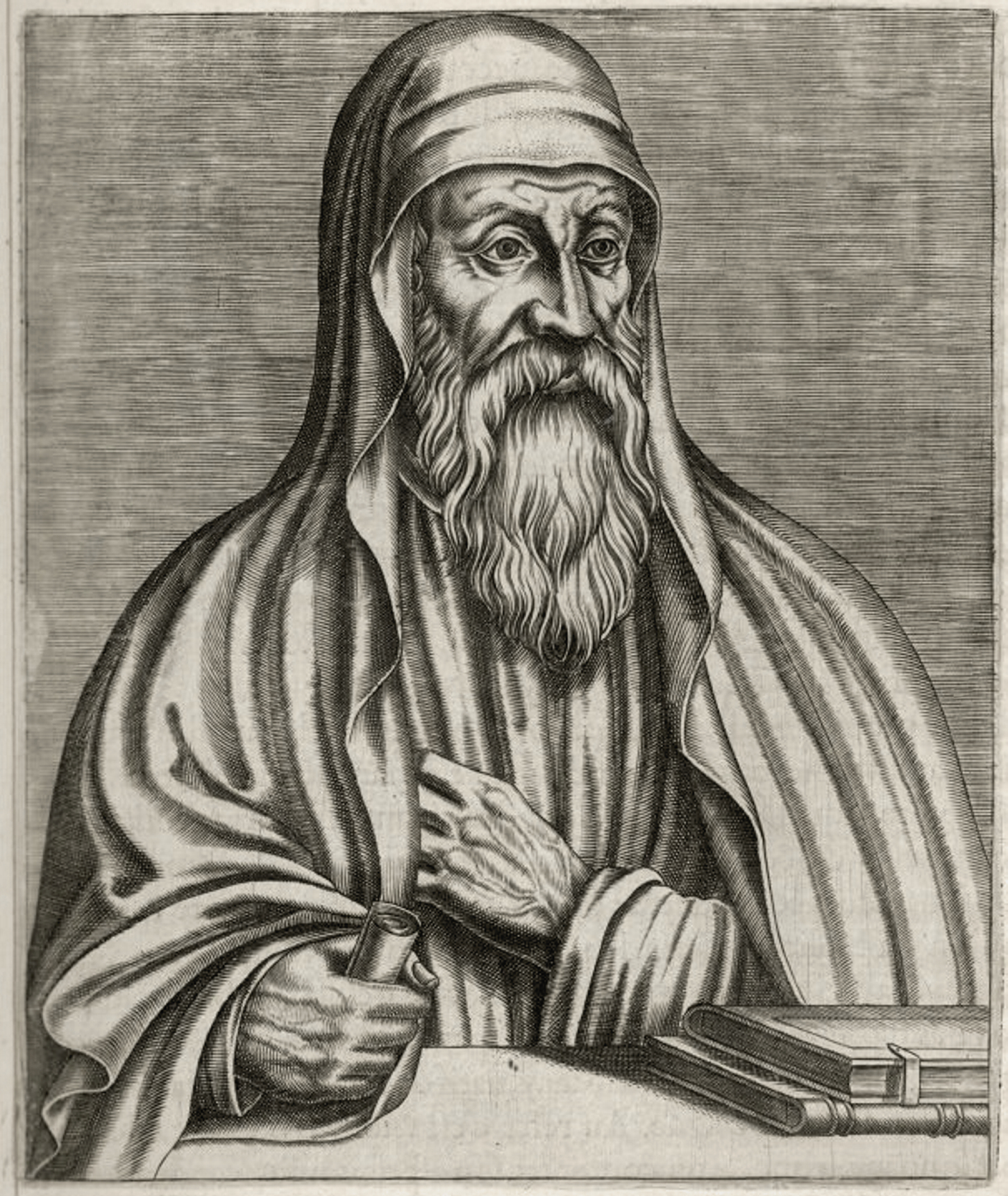
Another name for those who believe in the Apocatastasis has been Origenists

In Part VI, Engelder confronts the related error of apocatastasis, the eventual redemption and restoration of all the damned. This dangerous and unscriptural doctrine is the end of the road of the Hades Gospel.

[Note: Here is the link to the first (and introductory) post in this series: Prof. Th. Engelder on The Hades Gospel Part I: "The Hades Gospel", the second post: Part II, "The Argument in Support of the Hades Gospel,", the third post: Prof. Th. Engelder on the Hades Gospel Part III: "The Evil of The Hades Gospel" the fourth post: Prof. Th. Engelder on the Hades Gospel Part IV: "Some Remarks on the Question of the Salvation of the Heathen", the fifth post: Prof. Th. Engelder on the Hades Gospel Part V: "The Protestant Purgatory"]

He divides his critique into three sections. First he attacks on exegetical grounds, including an extensive discussion on the word "age(s)" means. He shows how that the denial of the eternality of damnation also undermines the beauty, surety, and everlasting nature of the promise of eternal life. Secondly, he attacks their elevation of reason over the Word of God [with a brief side trip to make the logical and historical connection between the belief in the apocatastasis and Pelagianism, and the dependence and example of Origen].

He states:
But it is a wicked business. "Men derive this dogma from their reason, their sense of justice, their conception of mercy. And men have not the right to use the argument under discussion. For what it amounts to is this: reason presumes to tell God what He must do in order to retain His character as a merciful and just God. And shall reason teach God ethics? Presumptuous reason is telling God that unless He conducts His judgment according to human standards, His conduct would be unfair, partial, unrighteous, unethical. ...Will a man judge God?" (CON. THEOL. MONTHLY, 1945, p.395.) These words were addressed to the Hades theologians, who demand, because of their "merciful" sentiments, that God must save half of the inmates of hell, Hades. They apply no less to the apocatastasis theologians, who because of their sense of "mercy and justice," require God to lead all the damned out of hell to heaven. And since the God of the Bible speaks a different language, they make out of the God of the Bible "a devil." Presumptuous reason will stop at nothing.

Monday, June 29, 2015

Prof. Th. Engelder on the Hades Gospel Part V: "The Protestant Purgatory"


Do men need further sanctifying and purifying after death? What of an intermediate state: purgatory or something akin to it? Can men truly be perfectly purged of the sin still clinging to them in the instant of death?

In "The Protestant Purgatory," Part V of his series of essays on the "Hades Gospel," Prof. Th. Engelder considers the teaching of purgatory, or the state(s) of men who are dead preceding the resurrection. He rightly points out the return to the Roman teaching of purgatory by Protestants who argue for the Hades Gospel (a second chance for salvation after death) and who support some sort of intermediate state in the afterlife. Engelder:

"That is the Catholic purgatory. And what is the Protestant purgatory? The Hades theologians, particularly those who believe in salvation by faith alone, refuse to embody all the Romish features in their reconstructed purgatory. But they have taken over this feature: the dying Christian carries remnants of sin with him into the next world and must go through a purgatorial, purifying process in Hades before he enters heaven."

Monday, June 22, 2015

Prof. Th. Engelder on the Hades Gospel Part IV: "Some Remarks on the Question of the Salvation of the Heathen"


This is the question that always gets raised. What about the people in ancient Peru who never heard the Gospel? What about the child in Saudi Arabia who is born a Muslim by no fault of his own yet strives to be a good and just individual?

[Note: Here is the link to the first (and introductory) post in this series: Prof. Th. Engelder on The Hades Gospel Part I: "The Hades Gospel", the second post: Part II, "The Argument in Support of the Hades Gospel,", and the third post: Prof. Th. Engelder on the Hades Gospel Part III: "The Evil of The Hades Gospel"]

In Part IV, "Some Remarks on the Question of the Salvation of the Heathen," Engelder takes up the issues and questions surrounding the salvation of the heathen. A particularly memorable line is the following: "Nor is it surprising that the liberal Protestants teach that the heathen can save themselves, with the help of God. The Liberals are blood brothers of the Catholics, of the race of Pelagius." The warnings of the essay are clear: do not give up the universality of grace though the facts seem to contradict this article of faith; and, do not be led into strange unbiblical doctrines by rationalizations and human searches into the unsearchable mysteries of God. These paths start in the (vain) hope of explaining God's ways further and more clearly than He Himself does, and ultimately leads to accusing the Lord Himself of evil and malice.

Wednesday, June 17, 2015

Prof. Th. Engelder on the Hades Gospel Part III: "The Evil of The Hades Gospel"


In his third essay on the topic, Engelder shows the falsehood of the Hades Gospel under 5 headings:

[Note: Here is the link to the first (and introductory) post in this series: Prof. Th. Engelder on The Hades Gospel Part I: "The Hades Gospel" And the second post: Part II, "The Argument in Support of the Hades Gospel,"]

1. To proclaim the "second chance" after death Hades Gospel contradicts the clear teaching of Scripture.

In this section, Engelder specifically meets the charge that a belief that the fate of a soul is fixed at death leaves no room for the final judgment. He also confronts the argument that since some of the Church Fathers accepted the possibility of conversion after death that we must as well.

2. Engelder's second major point is that the Hades Gospel's hope of a second chance rests upon human reason and speculation. He points out that the theologians who argue for such a teaching are following their own sense of justice and mercy in opposition to what the Scriptures actually say. Along the same lines, Engelder confronts the trick of many, which looks superficially like a concern for the analogy of faith, in which the teaching of "the whole Bible" (das Schriftganze) contradicts specific passages. Unlike the using the analogy of faith to explain apparent contradictions or seemingly difficult passages, hazy, and ill-defined broad principles (of course truly emanating from the interpreter himself) overwhelm or trump the clear words and teachings of the Scriptures.

"The Hades gospel, spawned by rationalistic thinking, is an evil thing. The Hades theology sets the verdict of reason and feeling above the declaration of God's Word. God wants His children to accept the teaching of Scripture in simple faith, to believe that God's ways are just and right even if they cannot understand them, but reason, "the archwhore and Satan's bride" (Luther, XX: 232), would seduce God's children from implicit faith and asks them to say to God: We cannot accept statements of Scripture which outrage our reason. The evil of the Hades gospel consists in this, that it weans the Christians away from the allegiance to their Lord."


Monday, May 11, 2015

Prof. Th. Engelder on The Hades Gospel Part II: "The Argument in Support of the Hades Gospel"


What was St. Peter talking about in regards to Christ's preaching to the spirits in prison? What was Christ preaching? The Law? The Gospel? The argument inevitably involves an exegetical discussion concerning the following passage:

1 Peter 3:18 For Christ also hath once suffered for sins, the just for the unjust, that he might bring us to God, being put to death in the flesh, but quickened by the Spirit:
19 By which also he went and preached unto the spirits in prison;
20 Which sometime were disobedient, when once the longsuffering of God waited in the days of Noah, while the ark was a preparing, wherein few, that is, eight souls were saved by water.

Saturday, May 9, 2015

Prof. Th. Engelder on The Hades Gospel Part I: "The Hades Gospel"


The Harrowing of Hell--What was Christ doing in Hell? What "preaching" was he doing there? Was he saving people? What happens to all those people today who die without ever hearing the Gospel? Do they really go to Hell...forever? Why are some saved and not others?

In six essays, published in the Concordia Theological Monthly during 1945-6, Theodore Engelder confronted the prevalent, and still persistent belief and false hope, that there is a "second chance" or further hope for salvation for those who die in unbelief.
 
[Here is a brief introduction to Engelder and his work.]

Monday, November 18, 2013

Christian Fundamentals by J. T. Mueller


Published in 1926, Christian Fundamentals by J.T. Mueller is a daily, 25 week, topical Bible Study on the basics of the Christian faith. Mueller was a professor at Concordia Seminary in St. Louis from 1920 to 1964. Besides the many works of his own, he is also remembered for condensing Pieper's Christlische Dogmatik into a one volume English version, Christian Dogmatics, and translating Walther's Kirche und Amt (Church and Ministry) into English.
 
The book succeeds in clearly and systematically presenting the basics of the faith. The beautiful prayers are an especially excellent aspect of this volume. The last three weeks are an in-depth study of the Gospel of St. John, one chapter per day. This last section is not just a fitting capstone for the work, but can really stand alone as a brief devotional work.
 
[See pictures below for examples of lessons and prayers, including several from the Gospel of John section.]

Tuesday, September 10, 2013

Justification of the Sinner before God by Eduard Preuss


Walther called Justification of the Sinner before God by Eduard Preuss the best book on Justification in the 19th century. Lutheran Legacy reprinted it a few years back and Prof. Roland Ziegler of Concordia Theological Seminary-Fort Wayne wrote a new introduction for it with expanded notes. It is an amazing book. I read it a few years back, and it deepened and clarified my understanding of Justification, not to mention helping my preaching overnight. The book has beautiful illustrations and powerful sermonic imagery. Throughout, but perhaps most impressively in the second half, Preuss offers concise, clear distinctions and arguments against false understandings of justification. The pastors of our circuit are studying it right now, and the fruit is evident!
 
Additionally, Prof. Ziegler presented a paper at the Fort Wayne Symposia on Preuss and Walther. This is required pre-reading for this L-TOM, and should be required reading for pastors going out into the field. Ziegler relates the sad story of how Eduard Preuss, though he had such a wonderful understanding of justification, he fell into the error of wanting to see the church triumphant on earth, adorned with wordly glory. He became tempted by Rome and wound up defecting. After contrasting Preuss' later stance with Walther's, Ziegler makes special plea for pastors (and all of us!) to be guard so as not to fall into the same trap Preuss did. Preuss seems to have not made use of going and talking to his brothers about his doubts and fears, but apparently was outwardly fine until BLAMO! he forsook his confession of faith. As always, the forked tongue of Satan works beneath cloak in secrecy, poisoning the well, isolating and drawing us away from those with whom we should be in conversation and from whom we are to hear the Word of God for support.
 
Need to Get Level: 10/10     [I know, they all have been 10's so far...but we had to start with strong, classic L-TOMs! I promise we'll get to some more obscure works.]

It is only 15 bucks, and has chapters of only 15-25 pages. Just get it! It is a must for pastors or those who wish to delve deep into the teaching of justification. It works wonderfully for circuit study.


Update: Found a picture of Prof. Eduard Preuss in A Century of Blessing (1846-1946) Concordia Theological Seminary, Springfield, Illinois. Click here for lots of pictures from that book.


Monday, September 9, 2013

Outlines of Doctrinal Theology by A. L. Graebner

Note: Thanks to Pr. Andrew Gray for our first guest post and pointing us to a great resource from old Missouri.


Outlines of Doctrinal Theology is a collection of concise doctrinal statements with Scripture references to show the origin of those statements.  It is a great quick reference guide and has great value for preparation and personal study.  Topics are arranged from prolegomena to eternal life and everything in between. 

It was written by A.L. Graebner who served as a professor at Concordia Seminary in St. Louis. [He is the father of Theodore Graebner] The book was published by Concordia Publishing House in 1910.  This would make the work in the public domain, though I was not able to find an available scan online. (Let me know if you find one.) It is however available in the Print-on-Demand section of the CPH site for what I would consider a very reasonable price at 29.99 for this work.
http://www.cph.org/p-6560-outlines-of-doctrinal-theology.aspx As with all of the books listed on L-TOM you might be able to find a copy if you search the right places. I picked mine up for a dollar at a Concordia Theological Seminary book sale a few years back.
               
The book began as dictated notes from the English lectures on Dogmatic Theology at Concordia Seminary St. Louis delivered by Graebner. The students had reprinted the notes and they began to be disseminated beyond the seminary. When it became apparent there was demand for the work Graebner in his preface notes, “Finally, the students’s supply was exhausted and the Board of Directors of Concordia Publishing House determined on the publication of this book, the author deemed it no longer proper to refuse his consent and cooperation.”
               
This is a great work to have in your collection. In our day, when there is a great temptation to cast off the teachings of our Lutheran Fathers, Graebner states, “While it has been the author’s constant aim to demonstrate the scripturalness of the doctrinal statements set forth in the Paragraphs of this book, he deems it a duty to say that he knows himself also in full accord with the doctrine of the Lutheran Chruch as laid down in the Book of Concord, and that the absence of references to the Symbols of our church, the norma normata of sound Lutheranism, must not be construed into a disparagement of the Lutheran standards or of any point of doctrine therein contained. With an emphatic refusal to apologize for having nowhere, from the first point in Bibliology to the last in Eschatology, progressed beyond the theology of our orthodox fathers, and with the fervent prayer that God would graciously keep him and his bretheren in the faith from any such progress, this humble contribution toward the theological literature of our church in America is dedicated to the service of our Lord and Savior Jesus Christ and commended to His divine blessing by the author.”   

Need to Get Level: 10/10

I would say that for the pastor's library it is a must have, especially for its quick reference value, and that laymen would get a lot out of it as well if they had it on their shelves. It is rather accessible.

Pastor Andrew Gray
St. John Lutheran Church-Marengo, IA