Showing posts with label Th. Engelder. Show all posts
Saturday, September 2, 2017
Engelder on "The Hades Gospel": Still Needed Today! (Compilation of All Links)
Once again, the worth of this theological treasure, Engelder's "The Hades Gospel," is proven. For those confused on the matter, Engelder makes clear that Lutherans do not believe in the "Hades Gospel." We do not believe that you get a "second chance" in the afterlife or on the Last Day.
People who die in unbelief go to hell. That is what the Bible teaches. If that is unsettling, than you must refresh your abhorrence and hatred for sin in conformity and in reflection of God's righteous wrath against sin. As Engelder points out, we must repent and mortify our fleshly thoughts. We are not to accuse God of sin by saying, or implying, that He wrongfully didn't give people a "fair chance" as if all men were not poor miserable sinners who deserve damnation.
Wednesday, October 28, 2015
Index of Posts on Theodore Engelder's series of essays concerning the "Hades Gospel"
The issue of the fate of the soul after death and the idea of a "second chance," with all the surrounding questions, is important for the Christian. Pastors especially ought to be able to give clear answers concerning this topic. Engelder's essays offer a firm biblical footing on the subject.
Posts on Engelder's essays on the "Hades Gospel":
Tuesday, October 27, 2015
Prof. Th. Engelder on The Hades Gospel Part VI: "The Hades Gospel and the Apocatastasis Gospel"
![]() |
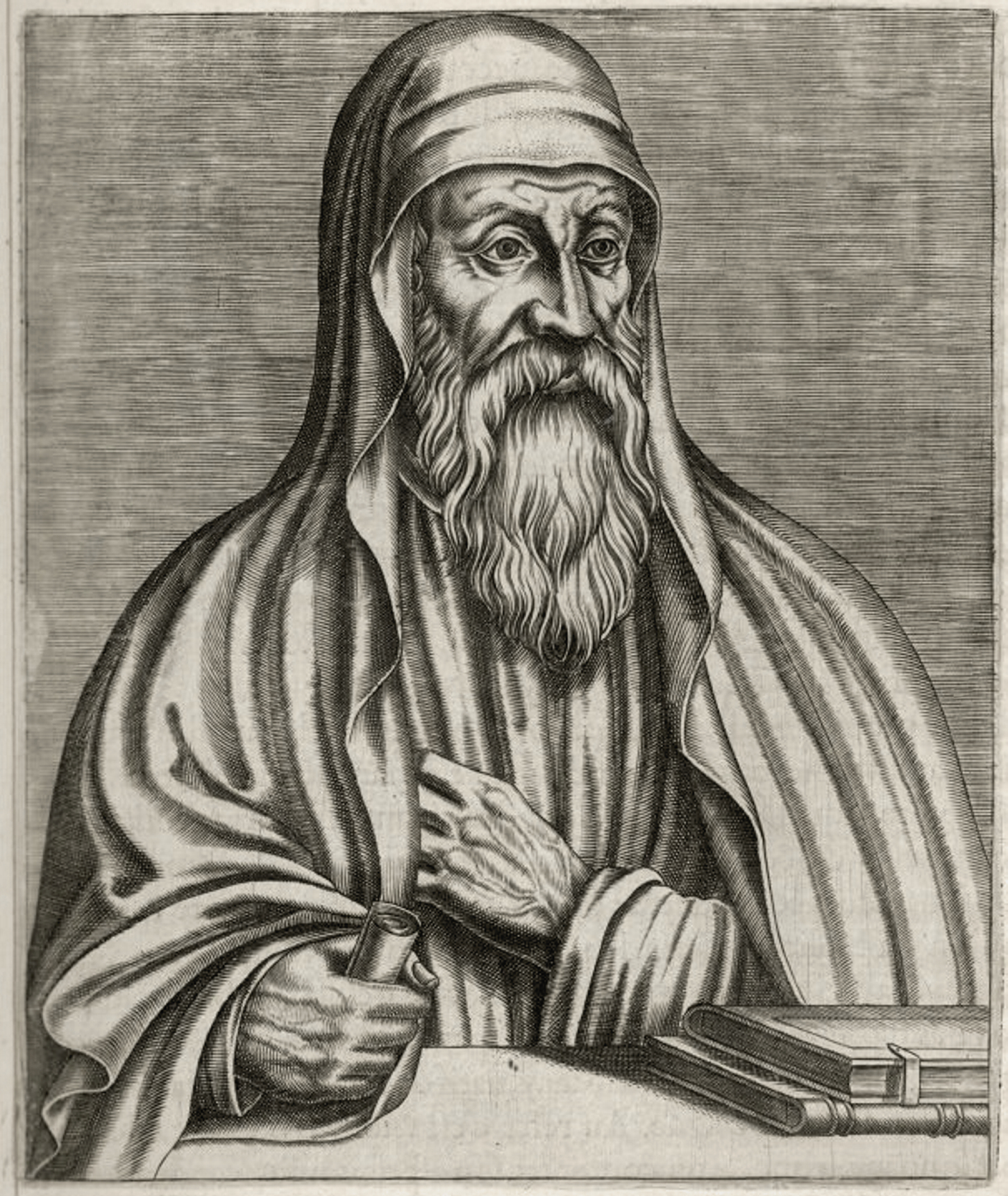
| Another name for those who believe in the Apocatastasis has been Origenists |
In Part VI, Engelder confronts the related error of apocatastasis, the eventual redemption and restoration of all the damned. This dangerous and unscriptural doctrine is the end of the road of the Hades Gospel.
[Note: Here is the link to the first (and introductory) post in this series: Prof. Th. Engelder on The Hades Gospel Part I: "The Hades Gospel", the second post: Part II, "The Argument in Support of the Hades Gospel,", the third post: Prof. Th. Engelder on the Hades Gospel Part III: "The Evil of The Hades Gospel" the fourth post: Prof. Th. Engelder on the Hades Gospel Part IV: "Some Remarks on the Question of the Salvation of the Heathen", the fifth post: Prof. Th. Engelder on the Hades Gospel Part V: "The Protestant Purgatory"]
He divides his critique into three sections. First he attacks on exegetical grounds, including an extensive discussion on the word "age(s)" means. He shows how that the denial of the eternality of damnation also undermines the beauty, surety, and everlasting nature of the promise of eternal life. Secondly, he attacks their elevation of reason over the Word of God [with a brief side trip to make the logical and historical connection between the belief in the apocatastasis and Pelagianism, and the dependence and example of Origen].
He states:
But it is a wicked business. "Men derive this dogma from their reason, their sense of justice, their conception of mercy. And men have not the right to use the argument under discussion. For what it amounts to is this: reason presumes to tell God what He must do in order to retain His character as a merciful and just God. And shall reason teach God ethics? Presumptuous reason is telling God that unless He conducts His judgment according to human standards, His conduct would be unfair, partial, unrighteous, unethical. ...Will a man judge God?" (CON. THEOL. MONTHLY, 1945, p.395.) These words were addressed to the Hades theologians, who demand, because of their "merciful" sentiments, that God must save half of the inmates of hell, Hades. They apply no less to the apocatastasis theologians, who because of their sense of "mercy and justice," require God to lead all the damned out of hell to heaven. And since the God of the Bible speaks a different language, they make out of the God of the Bible "a devil." Presumptuous reason will stop at nothing.
Monday, June 29, 2015
Prof. Th. Engelder on the Hades Gospel Part V: "The Protestant Purgatory"

Do men need further sanctifying and purifying after death? What of an intermediate state: purgatory or something akin to it? Can men truly be perfectly purged of the sin still clinging to them in the instant of death?
In "The Protestant Purgatory," Part V of his series of essays on the "Hades Gospel," Prof. Th. Engelder considers the teaching of purgatory, or the state(s) of men who are dead preceding the resurrection. He rightly points out the return to the Roman teaching of purgatory by Protestants who argue for the Hades Gospel (a second chance for salvation after death) and who support some sort of intermediate state in the afterlife. Engelder:
"That is the Catholic purgatory. And what is the Protestant purgatory? The Hades theologians, particularly those who believe in salvation by faith alone, refuse to embody all the Romish features in their reconstructed purgatory. But they have taken over this feature: the dying Christian carries remnants of sin with him into the next world and must go through a purgatorial, purifying process in Hades before he enters heaven."
Monday, June 22, 2015
Prof. Th. Engelder on the Hades Gospel Part IV: "Some Remarks on the Question of the Salvation of the Heathen"
This is the question that always gets raised. What about the people in ancient Peru who never heard the Gospel? What about the child in Saudi Arabia who is born a Muslim by no fault of his own yet strives to be a good and just individual?
[Note: Here is the link to the first (and introductory) post in this series: Prof. Th. Engelder on The Hades Gospel Part I: "The Hades Gospel", the second post: Part II, "The Argument in Support of the Hades Gospel,", and the third post: Prof. Th. Engelder on the Hades Gospel Part III: "The Evil of The Hades Gospel"]
In Part IV, "Some Remarks on the Question of the Salvation of the Heathen," Engelder takes up the issues and questions surrounding the salvation of the heathen. A particularly memorable line is the following: "Nor is it surprising that the liberal Protestants teach that the heathen can save themselves, with the help of God. The Liberals are blood brothers of the Catholics, of the race of Pelagius." The warnings of the essay are clear: do not give up the universality of grace though the facts seem to contradict this article of faith; and, do not be led into strange unbiblical doctrines by rationalizations and human searches into the unsearchable mysteries of God. These paths start in the (vain) hope of explaining God's ways further and more clearly than He Himself does, and ultimately leads to accusing the Lord Himself of evil and malice.
Wednesday, June 17, 2015
Prof. Th. Engelder on the Hades Gospel Part III: "The Evil of The Hades Gospel"
In his third essay on the topic, Engelder shows the falsehood of the Hades Gospel under 5 headings:
[Note: Here is the link to the first (and introductory) post in this series: Prof. Th. Engelder on The Hades Gospel Part I: "The Hades Gospel" And the second post: Part II, "The Argument in Support of the Hades Gospel,"]
1. To proclaim the "second chance" after death Hades Gospel contradicts the clear teaching of Scripture.
In this section, Engelder specifically meets the charge that a belief that the fate of a soul is fixed at death leaves no room for the final judgment. He also confronts the argument that since some of the Church Fathers accepted the possibility of conversion after death that we must as well.
2. Engelder's second major point is that the Hades Gospel's hope of a second chance rests upon human reason and speculation. He points out that the theologians who argue for such a teaching are following their own sense of justice and mercy in opposition to what the Scriptures actually say. Along the same lines, Engelder confronts the trick of many, which looks superficially like a concern for the analogy of faith, in which the teaching of "the whole Bible" (das Schriftganze) contradicts specific passages. Unlike the using the analogy of faith to explain apparent contradictions or seemingly difficult passages, hazy, and ill-defined broad principles (of course truly emanating from the interpreter himself) overwhelm or trump the clear words and teachings of the Scriptures.
"The Hades gospel, spawned by rationalistic thinking, is an evil thing. The Hades theology sets the verdict of reason and feeling above the declaration of God's Word. God wants His children to accept the teaching of Scripture in simple faith, to believe that God's ways are just and right even if they cannot understand them, but reason, "the archwhore and Satan's bride" (Luther, XX: 232), would seduce God's children from implicit faith and asks them to say to God: We cannot accept statements of Scripture which outrage our reason. The evil of the Hades gospel consists in this, that it weans the Christians away from the allegiance to their Lord."
Monday, May 11, 2015
Prof. Th. Engelder on The Hades Gospel Part II: "The Argument in Support of the Hades Gospel"
What was St. Peter talking about in regards to Christ's preaching to the spirits in prison? What was Christ preaching? The Law? The Gospel? The argument inevitably involves an exegetical discussion concerning the following passage:
1 Peter 3:18 For Christ also hath once suffered for sins, the just for the unjust, that he might bring us to God, being put to death in the flesh, but quickened by the Spirit:
19 By which also he went and preached unto the spirits in prison;
20 Which sometime were disobedient, when once the longsuffering of God waited in the days of Noah, while the ark was a preparing, wherein few, that is, eight souls were saved by water.
Saturday, May 9, 2015
Prof. Th. Engelder on The Hades Gospel Part I: "The Hades Gospel"
The Harrowing of Hell--What was Christ doing in Hell? What "preaching" was he doing there? Was he saving people? What happens to all those people today who die without ever hearing the Gospel? Do they really go to Hell...forever? Why are some saved and not others?
In six essays, published in the Concordia Theological Monthly during 1945-6, Theodore Engelder confronted the prevalent, and still persistent belief and false hope, that there is a "second chance" or further hope for salvation for those who die in unbelief.
[Here is a brief introduction to Engelder and his work.]
Friday, December 26, 2014
Theodore Engelder, 1865-1949 in Concordia Theological Monthly August, 1949
Theodore Engelder, 1865-1949; in CTM August, 1949
***Update: A little bit more of his bio, here, in German.
Here at L-TOMs, we sometimes will venture further back into the German speaking resources of the Missouri Synod from time to time, but are mostly focused on the English works of the first half of the century.
A major figure in the Synod during this time was Theodore Engelder, perhaps most famous for being the main translator for Pieper's Dogmatics and the book Scripture Cannot Be Broken, review and information on where it is available here. It is an excellent defense of the doctrine of Scripture's inspiration and inerrancy, a topic on which Engelder particularly concentrated.
Friday, September 13, 2013
Scripture Cannot Be Broken by Theodore Engelder
Scripture Cannot Be Broken (CPH 1944, 496 pages) by Theodore Engelder is a staunch defense of verbal inspiration and inerrancy. Engelder was also the main translator of Franz Pieper's Christian Dogmatics. He taught, especially Symbolics and Dogmatics, at both Springfield and then St. Louis. During his time at St. Louis, he published a series of articles in Concordia Theological Monthly, "Verbal Inspiration-A Stumbling-Block to the Jews and Foolishness to the Greeks," April '41 to December '42. These were compiled and edited into this volume due to encouragement from many within and without the Missouri Synod. It was a timely book since many Lutherans were wrestling with questions about verbal inspiration and the historical-critical method.
Strangely, the table of contents is found in the rear of the book alongside general and biblical indices. The longest section, almost half the book, is devoted to the answering of the question: "Does the Bible Contain Errors?" Engelder shows mastery of his opponents lines of argumentation and theological framework. He deals with the broad issue in the abstract or general sense, as well as confronting specific, frequently raised "errors." The remaining major chapters are:
II. Has the Bible Moral Blemishes?
III. Does the Bible Deal in Trivialities?
IV. The Disastrous Results of Criticizing and Correcting Scripture (A Resume)
V. Is Verbal Inspiration Mechanical Inspiration?
VI. Does Verbal Inspiration Imply an Atomistic Conception and Use of Scripture?
VII. Does Verbal Inspiration Establish a "Legalistic Authority of the Letter"?
VIII. The Battle for Verbal Inspiration (Final Resume)
Throughout the work, Engelder displays a gentlemanly and charitable demeanor. However, he does not pander or apologize to those who charge the Bible with falsehood, but rather exemplifies the sense of scandal and disgust the Christian should properly feel against such charges.
This volume stands well alongside other classic defenses of orthodox teaching on the nature and interpretation of the Holy Scriptures from that era such as P.E. Kretzmann's The Foundations Must Stand and W. Arndt's Bible Difficulties or here, or the updated edition from CPH.
Need to Get Level: 8/10
It is easy to find and cheap to buy. If you are a pastor, my question would be: "Why wouldn't you have this on your shelf?" At times it becomes technical and assumes a seminary education. I would therefore suggest Arndt's book (mentioned above) for the interested layman. But I certainly would not dissuade the ambitious layman who wishes to plow into Engelder's profitable work!
To those who think that the era of fighting over inerrancy or scriptural interpretation is over and that we have moved on, the time to relieve yourself of this uninformed opinion was yesterday. The battle over verbal inspiration does not make headlines or waves anymore, not because it is unimportant or fading away, but rather because it has largely been lost. Like feminism, denial of the truthfulness of the Scriptures is the default position of Americans today--especially the younger generations. Your parishioners live in a culture that denies the Bible. They breath in those presuppositions all day long. Engelder's work in this book is helpful, clear, and comprehensive on that thing which Satan has always rained down his blows upon--the Word of God.
Subscribe to:
Posts (Atom)