Sunday, June 23, 2024

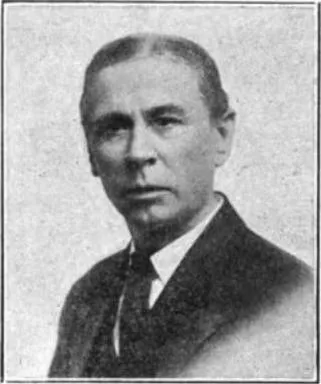
Franz Pieper on Using the Title "Father" for Ministers of the Gospel

The complaint over people using the title "father" in reference to pastors is a perennial canard. I personally don't use it as it hasn't been common in American Lutheranism, but there isn't anything intrinsically wrong with it. 

The Large Catechism teaches that pastors are spiritual fathers and that should be enough to stop the silliness of interpreting Jesus as if He doesn't want Christians to ever call anyone "father." Perhaps my favorite response is to ask the complainer if he also refuses to call his dad "father." 


If a Lutheran pastor is actually Romanizing or developing Easternizing tendencies, identify and deal with the substance of the problem. 

I've been called a "bronzie" more than once, and I obviously love "old Missouri." But if you're out bronzing Franz Pieper in a translation by J. T. Mueller, you've got a problem. 

Here's Franz Pieper on the subject:

Friday, November 24, 2023

"Brief Paragraphs on the Question: When does the New Testament Economy Begin?" by William F. Beck


William F. Beck is best known for An American Translation, or, as it is often called, the "Beck Bible" and other projects involving presenting the Bible to young and old. If you want to know a little more about Beck, his son Reu wrote an article on him in 2003. Beck also wrote several articles and shorter studies for the synodical seminaries' journals. Brief Paragraphs on the Question: When does the New Testament Economy Begin? in the March 1938 Concordia Theological Monthly was his earliest academic article as far as I can determine. It was written when Beck was a parish pastor in Clayton, IL. The article takes up a question that is natural, and frequently comes up in the mind of anyone who has read the Bible--how and when did the church shift from being under, or following, the particularities of the Old Testament's rites and rituals (economy) to the New Testament rites and rituals (economy)?


He begins by stating what Christians believe and is readily understood concerning the matter: 

Jesus, the Mediator of the New Covenant (Heb. 3:5,6; 8:6-13; 12:24), set aside the Old Covenant by means of His work of redemption during the thirty-three years of His humiliation (Gal. 4:4,5). In this period He fulfilled the Moral Law by keeping it (Rom. 5:19; 10:4), and by His suffering He freed us from its curse (Gal. 3:13). In this time He also substituted the reality of His atonement for the shadow of the Ceremonial Law and thus made the observance of its ordinances unnecessary (Col. 2:16, 17).

While the basic point is simple to understand, how this transition, or working out, unfolded is a little more complicated, as Beck points out:

The displacement of the old economy by the new nevertheless was not an instantaneous happening. The divine revelations of the abrogation of the whole Covenant and of the individual elements which make up the complex aggregate of the Covenant came at various times. Furthermore, the Covenant was to be eternal. It was difficult, therefore, for a people in whom this Covenant had been inbred to understand that part of it could be set aside, that an act which once was a sin of disobedience punishable by death might by divine direction become a good work. It was also difficult to find the clear line of demarcation between the ceremonial and the moral laws and then to maintain liberty, in the face of great opposition, in regard to the Ceremonial Law. Doubt in regard to the will of God and fear of sinning (e. g., Acts 10:14) lingered in the hearts of God's people and rendered the adoption of the change in practise a gradual one.

He first structures his discussion around the major events in the earthly ministry of Christ: His birth, relation to John the Baptist, baptism, public ministry, crucifixion, and resurrection. He then subjects particular practices of the Old Testament to two questions: "When did God expressly set it aside? At what time did His people become emancipated from it?" He covers the following topics:

Friday, January 20, 2023

"Freemasonry" by Rev. William Dallmann (Tract)

 
In the tract "Freemasonry," William Dallmann discusses the false teaching and anti-Christian nature of freemasonry. He doesn't get bogged down in broader theories about the masons but rather focuses on hanging their own words around them. This resulted in a brief, helpful summary of the problems and false doctrine of freemasonry.

The full tract is below.

Note: For another tract by Dallmann and a brief introduction to this new series, "Tracts of the old Missouri Synod," click here

Wednesday, January 18, 2023

"Why I Am a 'Missourian'" by Rev. William Dallmann and an Introduction to Tracts of Old Missouri


Tracts have always been a powerful form of popularly "getting the word out." During the Reformation, pamphleteers shaped the public's perception of innumerable topics. While perhaps memes have surpassed the paper tract or pamphlet today, they are still used and are of great use. 

I have seen hundreds of Lutheran tracts and am fascinated by them. They help us see what our forefathers thought was essential to say about particular subjects to a popular audience. Summarization betrays much about how a person, or a Synod, thinks and thus I'd like to share some of the tracts of "Old Missouri." 

Note: When posting tracts, I plan on keeping my commentary brief and posting the complete tract/s.

The first tract is "Why I Am a 'Missourian'" by William Dallmann


Thursday, October 13, 2022

President Pfotenhauer's Address to the 1917 Convention of The Evangelical Lutheran Synod of Missouri, Ohio, and Other States in Milwaukee


Rev. Johann Friedrich Pfotenhauer was the fifth president of the Missouri Synod and the last one who was born in Germany. He served as president from 1911-1935. 

Below is his address to the 1917 Synodical Convention. The convention was held June 20-29 in Milwaukee. You can find the Proceedings of the 1917 Convention here. Pfotenhauer's address was given in German, but the English translation is given below. 

Though given a little over a hundred years ago, the address is incredibly timely for our current situation--pestilence, wars and rumors of wars, the anniversary of the Reformation, the temptations of unionism and laxity. 


Pfotenhauer understood the dangers surrounding the Synod and directed the Christian men who were at the convention to cling to the treasure of the Gospel which they had received from the mercies of Christ.

Alas, it cannot be denied that in some respects we are not as our fathers were, that there has been a let-up in confessional definiteness and earnestness, in the love to God’s Word, in indoctrination, in the thorough instruction of the youth in the Catechism, and in the life of godliness. Oh, that we, as a synod might remain faithful and hold fast that which we have! Against us are the devil, the world, and our own evil flesh, as also the history of the Church, which shows that the Gospel did not continue in any one place for more than a few generations. For us are the mercy and grace of God, through which He, without our merit or worthiness, desires to retain among us the treasures of the Reformation.


It is certainly worth reading in full:


Monday, October 3, 2022

The Abiding Word: Volume I Part 1 "The Doctrine of Creation" by Prof. Gotthold Viehweg


As mentioned in the introductory post in this series, The Abiding Word was a project for the centennial celebration of the founding of the Missouri Synod. The essays were based upon convention essays and other works in German to preserve "the father's faith in the children's language."

Each essay reworks the treasures from the German speaking Missouri Synod in differing ways. Some summarize, some essays extensively quote, and others more extensively rework and synthesize previous essays. For each essay, I will try to provide some information about the author and give a brief review of the essay.

BTW, here are some some interesting links regarding the publication of The Abiding Word: Volume I:

-J .T. Mueller complaining about an unfair review in the ALC's periodical (scroll to page 624)  


1. The Doctrine of Creation by G. Viehweg was a 1945 convention essay of the Southern Nebraska District.


Pr. Gotthold Moritz Viehweg was a professor at Concordia College in Austin, Texas from 1928-1964. He was born in Planitz, Saxony on October 13, 1891. After coming to America, he went to Concordia College--Milwaukee and Concordia Seminary--St. Louis, graduating in 1914. He served as a pastor to congregations in Wellfleet, NE, Winfield, KS, and Arapahoe, NE. He died on August 19, 1977. (details found through CHI)

You can find some interesting correspondence of and about Viehweg and the beginning of his time at Concordia--Austin here.


The essays which form the background of Viehweg's work are:
    
    a. District Convention Essays 

        Atlantic, 1909, Chr. Merkel.
        Canada, 1898, F. Bente; 1901, H. Wente; 1903, Wm. Moll.
        Central, 1878, E. W. Kaehler; 1885, C. Gross.
        Illinois, 1885, A Brauer.
        Michigan, 1901, Th. Engelder.
        Nebraska, 1894, A. Graebner.
        South Dakota (and, it seems from the text of the essay, Southern), 1910, 1912, R. Pieper.
    
    b. Articles

        Lehre und Wehre22: 97, 240; 23: 273, 335, 362; 46: 8, 39, 135, 164, 217; "Die Evolutionismus und die Wissenschaften" by F. Bente. 55: 289, 351, 454, 499, 546; "Die Evolution und die Bibel" by J. Hoeness.
        Theological Quarterly, 9: 271, A. Graebner; 14: 78, 155, Th. Graebner. 

    c. Other References in the Text

        Christliche Dogmatik, F. Pieper. 
        Notes on Genesis, W. A. Maier.
        Evolution; an Investigation and a Criticism, Th. Graebner.
        Christliche Dogmatik, J. T. Mueller.
        Genesis, H. C. Leupold
        various quotes from Luther.

Viehweg strongly and hilariously condemns both the unbiblical and unscientific view of those who reject the biblical account of creation:

If we men presume to correct God's account of creation through inferences from the present condition of the world, we are indulging in unscientific conceit and pretense which does not become a Christian or any man for that matter. The disagreement between geologists concerning the age of the earth a man is so great that they can speak of the assured results of geology only if they completely give up the use of that small amount of reason which we still have after the Fall. Some are satisfied with a few hundred thousand years, other demand millions of years. Among these gentlemen a million of years is a mere trifle. They are very generous; a million more or less does not matter, but is that scientific?
He also relates the differing opinions of R. Pieper and some of the delegates of the Southern District concerning the firmament (which is actually a long running debate, z. B. Luther and Baier disagree on this):
R. Pieper, South. Distr., 1910, pp. 26, 27, claims that the waters beyond the firmament are nothing but the clouds...Some of the delegates of the Southern District   did not agree with R. Pieper's views on the firmament. They did not think that the firmament was the atmosphere surrounding the earth, but the star-spangled vault of the sky, that the clouds were not the waters beyond, but rather under firmament. The waters beyond the firmament were, in their opinion, not fog or vapor, but water whose nature is unknown to us.
Our forefathers also had quite a robust understanding of the natural knowledge of God. Concerning the birds of creation declaring the glory of God, Viehweg writes:

R. Pieper mentions especially the meadowlark and the nightingale. If a man has an ear for these voices, they sing into his heart the wisdom and goodness of his Creator, and admonish him to join them in the praises of the Creator, forgetting useless, heathenish cares and worries.
The essay is definitely worth reading in full. 

Need to Get Level: 10/10 for pastors; 3/10 for laymen [For the Abiding Word Set in General]

If you are a Lutheran pastor, particularly a Missouri Synod pastor, and do not have this on your shelf, you ought to be ashamed of yourself. Bear the proper fruit of repentance and get a copy. If you are a layman who is very interested in studying dogmatics or digging into a particular doctrinal topic, these essays will give you an English survey of what our early Missouri forefathers taught.

You can get new paperbacks from CPH, or find original hardbacks on Amazon and other online booksellers.

Other Posts in the Series on The Abiding Word

The Abiding Word: Volume I
The Abiding Word: Volume II
The Abiding Word: Volume III


Contents of Volume One


Tuesday, February 16, 2021

The Abiding Word: Introduction and Overview


The Abiding Word is a classic collection of doctrinal essays produced in honor of the Missouri Synod's centennial in 1947 and edited by Theodore Laetsch. The original collection included the only the first two volumes, which were district convention essays from 1945 published in 1946 and 1947. The third volume was a later continuation published in 1960 that included additional convention essays from the years 1955 and 1956. This also explains why the first two volumes are usually found in hardback and the last is, unfortunately, usually found in paperback. 

The essays in The Abiding Word are organized by doctrinal topic. The essays were the result of a deliberate plan to take from the best of the early convention essays (and other works) in the Missouri Synod, written in German, and rework and preserve those gems in English language essays. In the back of the first two volumes, there in an appendix that lists the works each author drew upon for his essay.

Monday, February 8, 2021

The Story of Our Church in America by Theodore Graebner


The Story of Our Church in America is a brief survey (33 pages) of the history of the Missouri Synod. While it is certainly not comprehensive, it offers a overview of the Missouri Synod's first 75 years. Of special note are the first three chapters which give a brief sketch of Lutheranism in North America before the founding of the Synod. Attention is given to the work of the Synod in education, publishing, and both home and foreign missions. The book has a wealth of pictures of the principle founders and leaders of the Synod as well as hand drawn maps that add a nice touch. Though originally published in 1922, the last chapter (of the version I have) includes an Addenda of supplementary material from 1932.

Thedore Graebner goes out of his way to thank a Mr. Bendix Taenzer of St. Louis, the artist of the maps. Graebner states that, "No such maps illustrating the history of American Lutheranism, and especially the work and development of our Synod, have ever been printed before." (The maps from the booklet are included as pictures below.) As a lover of maps myself, and a firm believer in their importance in teaching, I cannot help but echo Graebner's exhortation concerning their usefulness: "They deserve earnest study, and, once their meaning is well grasped, will deepen our realization of divine favors conferred upon our Church."


Tuesday, June 18, 2019

To What Intent Does God Afflict Us With Sickness? by Rev. Dr. Wilhelm Sihler


Image result for wilhelm sihler

This short paper, "To What Intent Does God Afflict Us With Sickness?", is an excellent, brief resource that addresses common questions surrounding the reality of suffering and God's omnipotence. The PDF of the work is provided by 1580 Press, a site where one can find many other L-TOMs and other Lutheran works. I believe 1580 Press is run by Nathan Higgins.

Sihler was an important figure in the formation of the Missouri Synod and the establishment of the Fort Wayne Seminary. For a article on his life and work, see "Professor Wilhelm Sihler: Founding Father of Lutheranism in America and First President of Concordia Theological Seminary" by Lewis Spitz Jr.

In this brief paper, Sihler directly confronts the often troubling truth that God sends sickness to both unbelievers and believers. Straightforward assertion of the truth and childlike trust in the Word and promises of God are hallmarks of Missourian writing--especially from this era. And on this front, Sihler does not disappoint. When discussing God sending sicknesses to unbelievers, he writes: 

Wednesday, June 12, 2019

The Victory of the Cross: Chapters from the History of the Early Church by Theodore Graebner


Our Faith Victorious was published in 1913 by Ernst Kaufmann in New York and was printed in Germany. It sold for 25 cents a copy. The book is a summary of early church history by Theodore Graebner. Graebner was a prodigous writer, especially of popular books and tracts, who served as the Lutheran Witness editor for 35 years (1914 to 1949) as well as teaching at Concordia Seminary--St. Louis. 

Here is a brief review of the book in the Augustana Synod's periodical The Lutheran Companion (November 22, 1913). 

Wednesday, December 26, 2018

Happy Feast of St. Stephen: "Some Difficulties in the Speech of Stephen, Acts 7" by William F. Arndt


Longtime professor at Concordia Seminary--St. Louis, William F. Arndt, wrote numerous books and articles on "Bible difficulties." These works focused on disabusing people of the notion that the Bible contained errors, showing that with calm logic and careful investigation one could resolve most alleged discrepancies, or, even when the resolution surpassed our knowledge or insight, that this did not necessitate or prove a contradiction. Sometimes a fair evaluation was one that might not be able to settle upon a single resolution, but had to leave several possibilities open. Arndt's purpose was to both dismiss alleged proofs of inaccuracies or mistakes that skeptics clung to and to lead believers to trust in the reliability of the Scriptures and have humility when approaching God's Word.


Saturday, September 2, 2017

Engelder on "The Hades Gospel": Still Needed Today! (Compilation of All Links)


Once again, the worth of this theological treasure, Engelder's "The Hades Gospel," is proven. For those confused on the matter, Engelder makes clear that Lutherans do not believe in the "Hades Gospel." We do not believe that you get a "second chance" in the afterlife or on the Last Day.

People who die in unbelief go to hell. That is what the Bible teaches. If that is unsettling, than you must refresh your abhorrence and hatred for sin in conformity and in reflection of God's righteous wrath against sin. As Engelder points out, we must repent and mortify our fleshly thoughts. We are not to accuse God of sin by saying, or implying, that He wrongfully didn't give people a "fair chance" as if all men were not poor miserable sinners who deserve damnation.

Wednesday, August 16, 2017

Zwingel Illustrated Bible History Timeline (Pictures of Artwork Included)


Recently, I was graciously given a box of Bible history maps by a parishioner's friend whose husband had been an Sunday School Superintendent for many years.

One of the maps was not actually a map at all. It was an illustrated Bible History Timeline. Or perhaps you would call it an Illustrated Biblical Chronology. Either way, it is an incredibly interesting and well done piece of educational art. The piece was made by Rev. Rudolph P. Zwingel, a Missouri Synod pastor whom I do not yet know much about.

Friday, August 5, 2016

"Propositions on Marriage and Divorce" (and Engagement) by P.E. Kretzmann


There is not much to say about this little gem from the June 1932 CTM by P.E. Kretzmann besides to commend its clarity. Kretzmann succinctly summarizes, and gives the pertinent biblical citations for, the traditional Lutheran (biblical) teaching on marriage, divorce, and engagement.

Since the 1950's, the Missouri Synod has sounded an unclear note, or at least one inconsistent with its own history, concerning its teaching on what makes a marriage a marriage, particularly in regards to how one rightly enters into marriage.

Much of the confusion, or avoidance of the issue, arose from a desire during the mid-20th century to change the Synod's teaching on engagement--resulting in a weakened definition and understanding of marriage.

This is especially apparent when you trace the evolution of the synodical explanation of the catechism on the 6th Commandment. Up to and including the 1943 version, the teaching on the nature of marriage, and how it is entered into, reflects the same teaching that had been clearly set forth in countless articles, essays, books, and presentations throughout the Synod's history, which in turn stood in continuity with the teaching of Luther, Lutheran Orthodoxy, and the Scriptures themselves.


From the 1912 explanation:

Wednesday, August 3, 2016

A Short Exposition of Dr. Martin Luther's Small Catechism (1912): Reviewing the New Proposed Synodical Explanation to the Small Catechism


As the "field-test" edition of the new version of the Explanation of the Small Catechism has been sent out to all Missouri Synod pastors and congregations, I expect (or at least hope) that pastors especially will take this opportunity seriously to look at the work of the committee.

Two specific things that I am doing as I review the new version, and I would recommend to others as well, are:

1. Read the coordinate section of the Large Catechism before and after each section.

2. Compare the proposed new version to the older versions. I would not only look at the most recent/current version, but also the 1943 and 1912 versions of the synodical explanation. The current version and 1943 versions are reasonably easy to get your hands on, but it is less likely for folks to have a physical copy of the 1912 version.

Fortunately, you can find the 1912 German-English edition online here.


Need to Get Read Level: Pastors 10/10, Laymen 5/10

Friday, July 29, 2016

"Dr. Francis Pieper the Churchman" by W.H.T Dau


In the October 1931 Concordia Theological Monthly, W.H.T. Dau wrote a moving tribute in honor of the Dr. Francis (Franz) Pieper, who had passed away that June. He begins his essay by quoting part of Pieper's address to the Missouri Synod's 1893 convention.

There is no such thing in the Christian Church as mere teaching; all teaching is to be reduced to practise. The Christian Church is not a philosophers' school, where only teaching is done, but a society of people who by faith in the Gospel and mortification of the flesh are traveling on the way to everlasting life and are commissioned to lead others into this way. 

Dau recalls that this essay gave the delegates confidence that Pieper was carrying on the confessionalism of Walther at the St. Louis Seminary, and noted that the convention would elect him to be the president of Synod 6 years later. Dau makes the point that according to Walther and Pieper, and in truth, teaching theology and administering practical affairs are by no means of a conflicting nature, but logically and necessarily connected. Dau further says:

Thursday, July 28, 2016

DOMI MANSIT--"She Stayed at Home"


In the Concordia Theological Monthly of October 1936, P.E. Kretzmann placed sections of an editorial from the magazine America in Miscellanea. While not a Lutheran writing, it is indeed a treasure that every Lutheran would heartily celebrate and by it be uplifted. "She Stayed at Home" is true, sweet, in the best sense of the word, and a heartfelt reminder of the great gift of motherhood our Lord has bestowed upon mankind.

Would we continue to see in today's Lutheran periodicals such sentiments and praise for the work, being faithfully and lovingly carried out, that God has given to womankind.

Read it below, or go here to read/access the PDF (go to the last page in the document).


Wednesday, July 27, 2016

"Matins as the Chief Service" by P.E. Kretzmann


Note: Thank you very much to Rev. Aaron Uphoff of Good Shepherd Lutheran Church, Randolph, NJ for the "heads up" and commentary on this interesting article.


In his June 1933 article in Concordia Theological Monthly, “Matins as the Chief Service,” P.E. Kretzmann gives modern readers a glimpse into a previous generation’s disagreements about worship.  Responding to the apparent push by some Lutheran ministers to substitute Matins for the Common Service without Communion on certain Sundays and/or festivals, Kretzmann gives an overview of three principles which guide Lutheran liturgics, discusses their application in service liturgies, and suggests guidelines should one insist upon making the Matins substitution.

The three principles are the gem of the article and he outlines them thusly:

1. Liturgical Unity: The liturgy must have a “singleness, wholeness, unity, so that the service does not present a disjointed conglomeration, but organizes into a single whole the many parts and intricate relations of a great symphony or a Gothic cathedral.” (p.438)

Monday, December 28, 2015

Living with Luther by J. M. Weidenschilling


J.M. Weidenschilling was a master at summarization and brevity. He produced many short works on basic subjects for the Missouri Synod in the 1940's and 50's. Some of the most famous and widely used were: Our Bible; Our Church; and, Our Creed. Living with Luther is a slender 48 page booklet originally designed to be used in the classroom. It could also easily be used as an introduction or jumping off point for an adult study or a tract for anyone wanting a brief overview of the life of Martin Luther and the Reformation.

Living with Luther was published by Concordia Publishing House in 1945, was slightly revised in 1970, and reprinted numerous times. The illustrator was Gustav Koenig. The Lutheran Heritage Foundation also worked to have it translated into Lithuanian in 1996 (translator: Renata Ambrazeviciene).

Weidenschilling was working in the tradition of Gustav Just's Life of Luther to provide a concise, basic summary of Luther's life and introduction to the Reformation. The two works cover much of the same ground, often even in the exact same sequence and manner. The pictures in the older volume are again used in Weidenschilling's, though they are supplemented with additional illustrations.

Wednesday, December 23, 2015

An Explanation of the Common Service


Note: Thank you very much to Rev. Mike Grieve of Holy Cross Lutheran Church, Golden, IL for this excellent review of a true classic. Anyone wanting to know more about our worship service in the Lutheran Church truly ought to pick this book up. It can be purchased from Emmanuel Press. It was originally compiled and published by the General Council to teach people about the beauty and truth of the Common Service. What a blessing that it is still in print!


“An Explanation of the Common Service”:  Fifth Edition Revised and Enlarged; United Lutheran Publication House, Philadelphia, 1908; Reprinted in 2006 by Emmanuel Press, 1916 Ridgewood Ave., SE, Grand Rapids, Michigan 49506

            The answer, “that’s the way we’ve always done it,” to the question of, “why do we do what we do in worship?” is not only unhelpful, but it’s also false. We do know “why we do what we do in worship.”  Sometimes we just don’t know where to find the answer to the question.  An Explanation of the Common Service helps give concrete answers to questions that would otherwise be left in abstract thought and speculation.  What would seem to be a daunting number of questions and answers (250) is eased by the reality that the book is just 120 pages in length, which includes a history of Christian hymnody; liturgical colors and their significance; and index and glossary.